.svg)




Connecting the data
⏱ 4 minutes read
Learn how to use daily and long-term data to make choices about diabetes management.
Get quick and easy access to our support team.
ADC-109888 v1.0






GB Mainland: 3 day delivery
Northern Ireland: 3-4 day delivery
(Estimated standard delivery)

All payments are secure and encrypted

Your cart is empty
Food is more than fuel—it’s connection, comfort, and joy. Managing diabetes doesn’t change that. A balanced plate helps you stay steady without giving up the meals you love.

/building_balanced_meals/building_balanced_meals_header_desktop.png)
Every bite tells a story about how your body uses energy. Carbohydrates, protein, fat, and fibre each play their part.
Discover more practical tips for balancing food and lifestyle
/building_balanced_meals/why-balance-matters.png) The FreeStyle Libre apps are only compatible with certain mobile devices and operating systems. Please check the website for more information about device compatibility before using the apps.
The FreeStyle Libre apps are only compatible with certain mobile devices and operating systems. Please check the website for more information about device compatibility before using the apps.
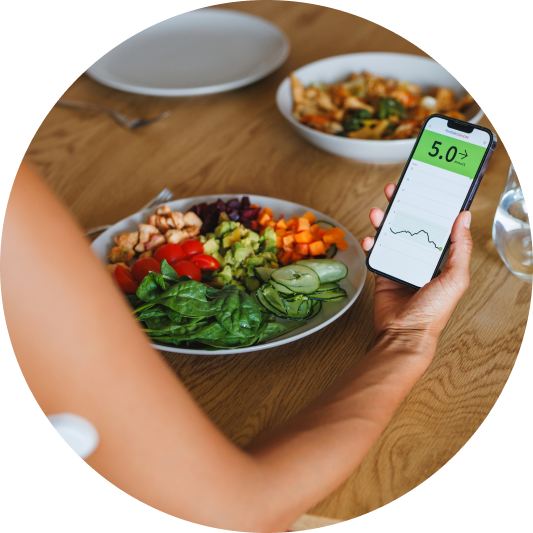
The diabetes plate method is a simple, visual way to create balance without needing to track every detail.

Half your plate: Non-starchy vegetables like leafy greens, peppers, broccoli, or cauliflower. These add fibre, volume, and nutrients while helping keep your levels steady5.

One quarter: Protein such as eggs, tofu, fish, chicken, or beans. Protein keeps you full longer and slows how quickly carbs affect your levels6.

One quarter: Carbohydrates such as quinoa, whole grains, fruit, or starchy vegetables. Choose high-fibre options when you can, and keep portions consistent7.

Add a small amount of healthy fat4: Avocado, nuts, olive oil, or seeds. These add flavour and keep energy levels balanced.
You can adjust your meals to fit your needs.

Breakfast: Scrambled eggs on toasted bloomer topped with fresh rocket, cherry tomatoes, and yellow peppers, finished with a balsamic glaze.

Lunch: Sliced roasted chicken on a quinoa and kale salad with butternut squash, cherry tomatoes, olives, and mixed seeds.

Dinner: Pan-seared salmon with buckwheat, steamed green beans, and a sauté of peppers and edamame, served with a lemon wedge.

/building_balanced_meals/start_with_one_meal.png)
Pick one meal today to make a little more balanced. Add vegetables, swap in whole grains, or include a protein you love.
Watch your Libre 2 Plus sensor or Libre 3 Plus sensor data to see how the change impacts your levels.
Every balanced plate is a step towards steadier days, more energy, and progress.
⏱ 4 minutes read
Learn how to use daily and long-term data to make choices about diabetes management.

⏱3 minutes read
Learn how different types of movement affect your glucose levels.
The “Yes” link below will take you to a website other than Abbott Laboratories. Links pointing you to other websites are not under the control of Abbott Laboratories, and Abbott Laboratories is not responsible for the content of such websites or other links contained on such website. Abbott Laboratories provides these links only as a courtesy and the inclusion of any link does not imply endorsement by Abbott Laboratories of the site.
Do you want to leave this page?
FreeStyle.abbott/uk-en is a product specific website only intended for residents of the United Kingdom. If you live in another country, please contact your local Abbott office to obtain the correct product information for your country of residence.

