.svg)



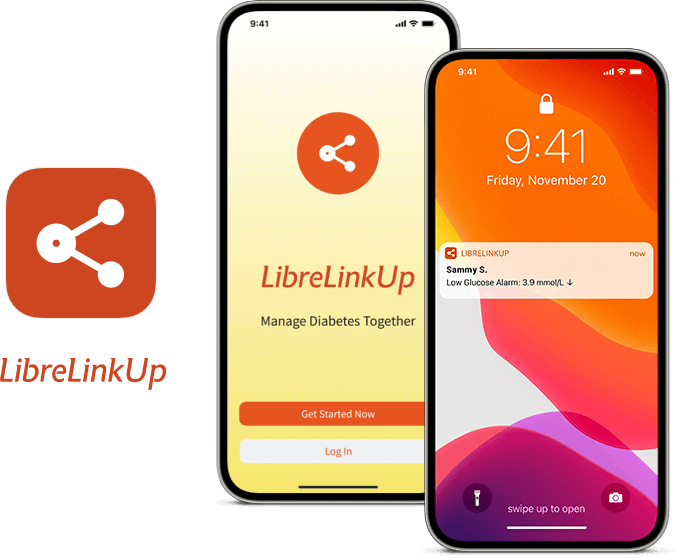
Share data with caregivers
⏱ 3 minutes read
Share your glucose data with friends, family and caregivers with the LibreLinkUp app.§
Get quick and easy access to our support team.
ADC-109888 v1.0






GB Mainland: 3 day delivery
Northern Ireland: 3-4 day delivery
(Estimated standard delivery)

All payments are secure and encrypted

Your cart is empty
A small but growing number of children have type 2 diabetes, which is linked to obesity and often develops more quickly and aggressively than in adults.2
Once diagnosed, all children with diabetes and their families should receive ongoing support, treatment and advice from a specialist care team. They’ll also have an individual health care plan (IHP) that can be shared with teachers and carers.3
Being diagnosed with diabetes is life-changing for children and their families, so emotional support should be available to help cope with challenges and setbacks.
All children with type 1 diabetes need insulin to help control their glucose levels. They can take insulin by:4
Each method has pros and cons, and every child with diabetes is an individual, so deciding which option to go for should take their lifestyle and preferences into account.4
Treatment for children with type 2 diabetes usually starts with healthy eating, exercise, supervised weight loss and medication such as metformin.5



Children who treat their diabetes with insulin will need to balance the carbohydrates they eat with their insulin regime.8 Your diabetes care team might suggest a course for the family to learn about counting carbohydrates in foods and drinks and how they affect glucose levels.8
For children with type 2 diabetes, healthy eating is an important part of treatment as it can help weight loss, which in turn can lower glucose levels and reduce the risk of cardiovascular disease.9
Regular exercise is good for all children, and children with diabetes can take part in all kinds of exercise and sport if they want to.10
Exercise is beneficial to long-term health, but in the short term it can affect glucose levels, increasing the risk of spikes (hyperglycaemia) and lows (hypoglycaemia).10
Testing glucose before and after exercising can help children learn how their body responds to different types of exercise, and spot when they may need an extra snack or to adjust an insulin dose.10
It’s a good idea to involve teachers and sports coaches, so they’re aware of your child’s IHP and how to help them if they need it.10


When your child’s ill, especially if they have a fever, have sickness or diarrhoea or can’t face food, it can be much harder to manage glucose levels safely. It’s important to contact your child’s diabetes care team if you’re unsure what to do.12
Your diabetes care team can help you devise a sick day care plan for your child, which might include a set of ‘sick day guidelines’ to follow, to help your child manage their glucose until they feel better.12
⏱ 3 minutes read
Share your glucose data with friends, family and caregivers with the LibreLinkUp app.§

⏱ 6 minutes read
Get familiar with the tools and the resources at your disposal to support your diabetes care with confidence.
The “Yes” link below will take you to a website other than Abbott Laboratories. Links pointing you to other websites are not under the control of Abbott Laboratories, and Abbott Laboratories is not responsible for the content of such websites or other links contained on such website. Abbott Laboratories provides these links only as a courtesy and the inclusion of any link does not imply endorsement by Abbott Laboratories of the site.
Do you want to leave this page?
FreeStyle.abbott/uk-en is a product specific website only intended for residents of the United Kingdom. If you live in another country, please contact your local Abbott office to obtain the correct product information for your country of residence.

