
Type 2 Diabetes: The basics


  • What is it?

    Type 2 diabetes develops when your body starts to produce less insulin, or the insulin it produces stops working efficiently. Type 2 diabetes isn’t an autoimmune disease like Type 1 that comes on quickly—it develops over many years.1 Type 2 diabetes can be prevented and some people find they can put their condition into remission.2

    What's the cause?

    Type 2 diabetes is closely associated with risk factors such as age, being inactive, carrying excess weight and having high blood pressure.3 The number of people with the condition has doubled in the last 20 years, mainly due to the rapid rise in the number of people with Type 2.4

  • Who can get it?

    About 90% of people who have diabetes in the UK have Type 2.5 It’s most often diagnosed in people who are over 40, although it can affect younger people too, even children.8 People who have a close relative with Type 2 diabetes and people of South Asian, African-Caribbean or Black African heritage also have a greater risk of developing Type 2.3

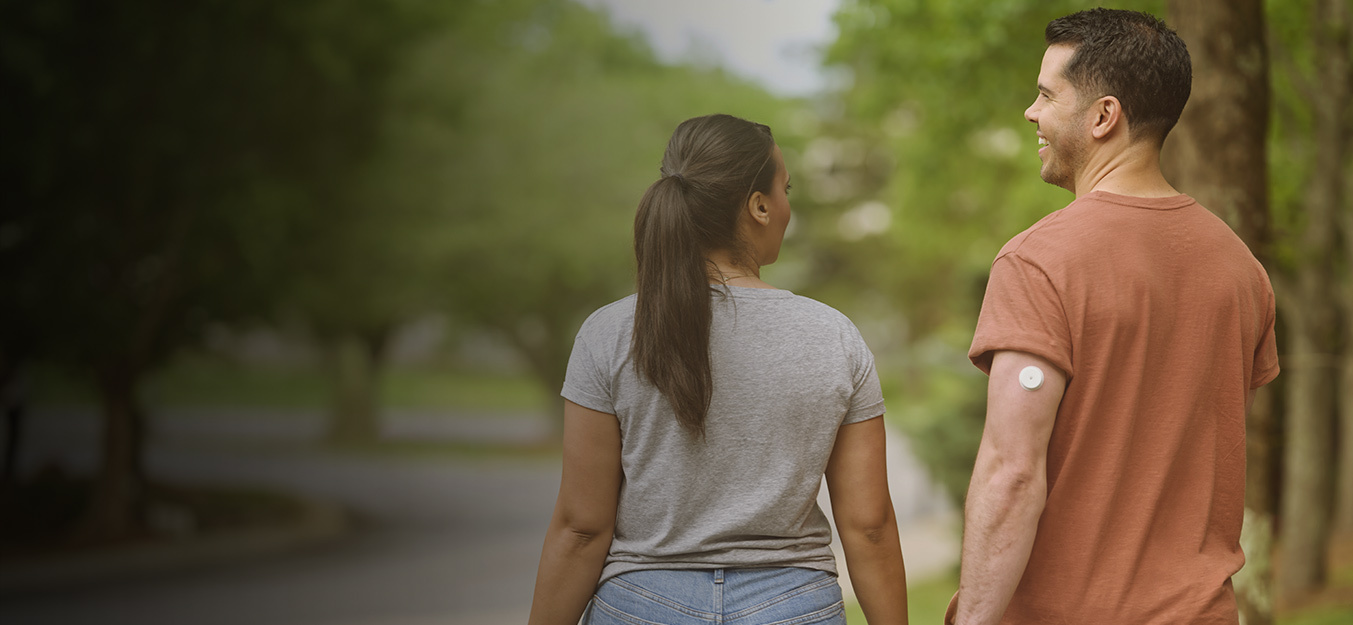
Women with Libre 2 sensor gardening

How do I know if I have Type 2 diabetes?

It’s believed that 1.3 million people in the UK have Type 2 diabetes but haven’t been diagnosed as the year 2025.5

Without the right care and support, people with all types of diabetes can be at risk of developing serious complications.5 It’s important not to ignore symptoms of high glucose levels.1

Symptoms1

  1. Urinating frequently
    particularly at night

  2. Feeling very thirsty

  3. Feeling very tired

  4. Unexplained weight loss

  5. Blurred eyesight

  6. Itchiness around the genital area
    or regular bouts of thrush (a yeast infection)

  7. Cuts or wounds that heal slowly

Why you need to manage your diabetes

Over time, persistently high sugar levels can lead to serious health complications. But eating healthily, managing your weight and staying active helps your body to keep your sugar levels in check. Positive lifestyle changes in the areas within our control can result in weight loss, improved mental health and less risk of serious health problems down the road.

Food text

Living with type 2 diabetes?

Join Katie and Giancarlo Caldesi as they share flavourful recipes, smart food tips, and real-life advice on how the FreeStyle Libre 2 system supports confident food choices.

Image of Katie holding a dish plate

Monitoring your glucose levels

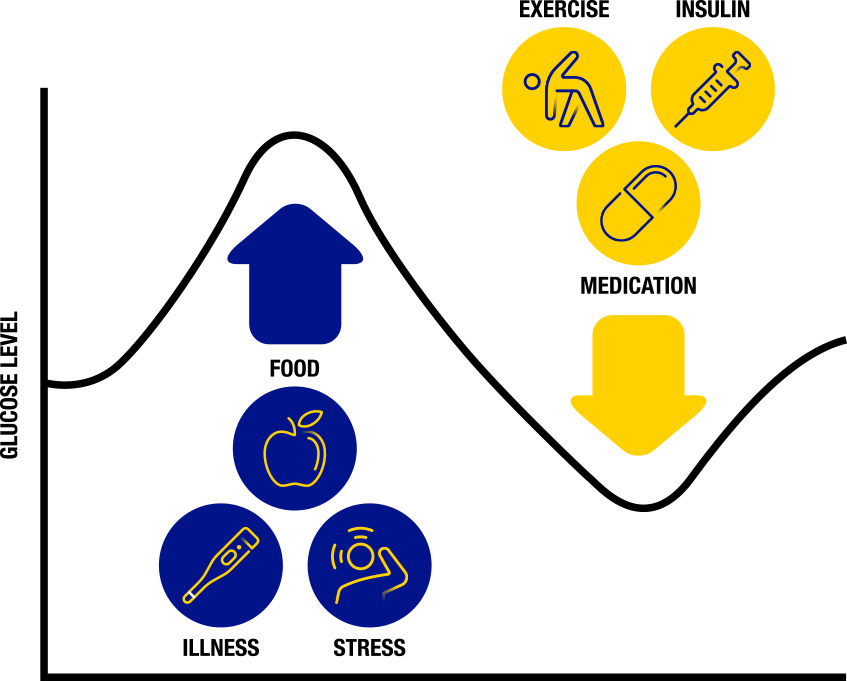
It is essential to monitor your glucose levels as factors like diet, physical activity, medication, sleep and stress can have a big impact on them. Keeping track of your glucose levels provides a glimpse into how your choices shape your health and allows you to connect the dots between what you do and the effect glucose levels have on your body. This helps you make small lifestyle adjustments for big changes!

There are two different ways you can monitor your glucose levels:

Real Time Drop icon

Finger pricks
(Blood Glucose Monitoring/BGM)

Measures glucose levels in blood

  • Requires finger pricks

  • Requires daily manual testing

  • Requires you to carry strips, lancet and meter

  • Provides readings from a single moment of time

FreeStyle Libre 2 sensor icon 

FreeStyle Libre 2 Sensors**
(CGM)*

Measures glucose levels in interstitial fluid

  • Painless—no need for finger pricks6,†

  • Readings sent to your smartphone every minute◊,ǁ

  • Small, discreet, comfortable to wear sensor6

  • See current level and changes over timeφ

Building a full picture

Finger pricks provide glucose levels at a single moment in time, whereas a CGM sensor measures your glucose continuously, giving you a complete picture.

Glucose level & time in range graph

Reducing variability

Glucose variability is how much your glucose levels spike and drop throughout the day. You should aim to reduce those spikes and drops to keep your glucose levels under control. CGM makes it easy to track this variability without needing to finger prick.

Time in range graph.

The FreeStyle Libre 2 system

Manage your diabetes with ease6 & confidence7 with real-time glucose readings sent right to your smartphone◊,II

FreeStyle LibreLink app screenshot on smartphone with Libre 2 sensor next to it
 

References & Disclaimers

Images are for illustrative purposes only. Not real patient or data.

1. Diabetes UK 2019, Differences Between Type 1 and Type 2 Diabetes, https://www.diabetes.org.uk/diabetes-the-basics/differences-between-type-1-and-type-2-diabetes (Last accessed 24 February 2025)

2. Diabetes UK 2019, Type 2 Diabetes, https://www.diabetes.org.uk/about-diabetes/type-2-diabetes (Last accessed 24 February 2025)

3. Diabetes UK 2019, Diabetes risk factors, https://www.diabetes.org.uk/about-diabetes/type-2-diabetes/diabetes-risk-factors (Last accessed 24 February 2025)

4. Diabetes UK 2019, Tackling the crisis, https://www.diabetes.org.uk/resources-s3/2019-04/Diabetes%20UK%20Tackling%20the%20Crisis.pdf?/ (Last accessed 24 February 2025)

5. Diabetes UK 2019, Facts and stats January 2019, https://www.diabetes.org.uk/professionals/position-statements-reports/statistics (Last accessed 24 February 2025)

6. Haak, T. Diabetes Ther. (2017): https://doi.org/10.1007/s13300-016-0223-6

7. Fokkert, M. BMJ Open Diab Res Care (2019): https://doi.org/10.1136/bmjdrc-2019-000809

8. Diabetes UK (2023), New NHS England programme improve type 2 diabetes care people under 40, https://www.diabetes.org.uk/about-us/news-andviews/new-nhs-england-programme-improve-type-2-diabetes-care-peopleunder-40 (Last accessed 28 February 2025)

* FreeStyle Libre 2 flash glucose monitoring system is a continuous glucose monitoring system.

** FreeStyle Libre 2 Sensors refer to FreeStyle Libre 2 and FreeStyle Libre 2 Plus sensor.

† Finger pricks are required if glucose readings and alarms do not match symptoms or expectations.

ǁ Glucose readings are automatically displayed in the FreeStyle LibreLink app only when your smartphone and your sensor are connected and in range.

◊ The FreeStyle LibreLink app works with FreeStyle Libre 2 Plus sensor and is only compatible with certain mobile devices and operating systems. Please check the website for more information about device compatibility before using the app. Use of FreeStyle LibreLink may require registration with LibreView.

φ For a complete glycaemic picture on FreeStyle LibreLink app, scan your sensor with your smartphone once every 8 hours during signal loss.


ADC-100913 v2.0

This site is protected by reCAPTCHA and the Google Privacy Policy and Terms of Service apply.

Loading...