


Call 877-MY-LIBRE today
(877-695-4273)

Talk to a specialist now to confirm your insurance coverage and arrange convenient home delivery. The Libre systems are widely covered by Medicare for people managing diabetes with insulin*1,2.
Abbott provides this information as a courtesy and does not guarantee payment or coverage.
If you’re on a Medicare plan and manage your diabetes with insulin2, or have problematic hypoglycemia (or low sugar levels)2, you may be covered for Libre systems. Most Medicare Advantage/Managed Medicare patients pay $0||1 at the pharmacy for Libre CGM systems.
CGM coverage depends on the plan you have—Medicare Advantage or Original Medicare.

(Provided by private insurers on behalf of the federal government)

(Provided by the federal government)
Medicare cards look different, but have common elements to help determine your coverage.
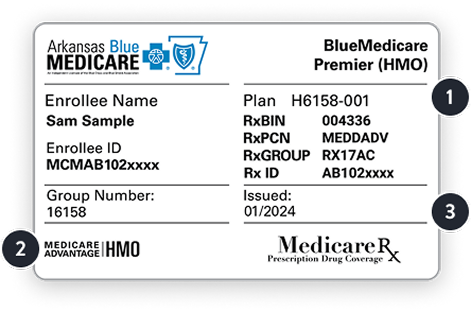
For illustrative purposes only.
1. Plan details
2. Indicates Medicare Advantage
3. Coverage start date
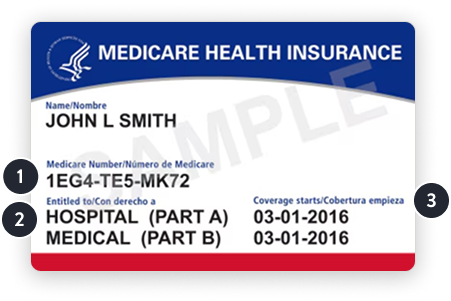
For illustrative purposes only.
1. Medicare number
2. Coverage type
3. Coverage start date
For illustrative purposes only.
1. Plan details
2. Indicates Medicare Advantage
3. Coverage start date
For illustrative purposes only.
1. Medicare number
2. Coverage type
3. Coverage start date
Find out if the Libre systems are right for you. Your prescription must include both the reader# and the sensors to be eligible* for Medicare coverage.
Need help starting the conversation? Read our handy guide.

Yes. Medicare covers Libre systems for people with T1D or T2D2.
You may be covered with Medicare if:
Reference: 2. Local Coverage Determination (LCD) L33822, Glucose Monitors. Accessed September 9, 2026. https://www.cms.gov/medicare-coverage-database/view/lcd.aspx?LCDId=33822.
CGMs, including Libre systems, are covered under Part B of Original Medicare, billed as DME4. This includes the cost of the CGM device and essential supplies such as sensors and transmitters4,7.
References: 4. Centers for Medicare & Medicaid Services. “Durable Medical Equipment (DME) Coverage.” U.S. Department of Health and Human Services. Accessed September 9, 2026. https://www.medicare.gov/coverage/durable-medical-equipment-dme-coverage. 7. Centers for Medicare & Medicaid Services. “Medicare Coverage of Diabetes Supplies, Services, & Prevention Programs.” U.S. Department of Health and Human Services. Accessed September 9, 2026. https://www.medicare.gov/publications/11022-medicare-coverage-of-diabetes-supplies-services-and-prevention-programs.pdf.


The FreeStyle Libre 3 system includes the Libre 3 Plus sensor, Libre 3 sensor, Libre 3 app, Libre app, and the Libre 3 reader.
The FreeStyle Libre 2 system includes the Libre 2 Plus sensor, Libre 2 sensor, Libre app, and the Libre 2 reader.
FreeStyle Libre 3 system is cleared to be used by children 4 years and older with Libre 3 sensor and 2 years and older with Libre 3 Plus sensor.
FreeStyle Libre 2 system is cleared to be used by children 4 years and older with Libre 2 sensor and 2 years and older with Libre 2 Plus sensor.
Medicare and other payor criteria may apply. Abbott provides this information as a courtesy and does not guarantee payment or coverage.
Coverage and out-of-pocket costs may vary based on your individual insurance plan. Please contact your insurance provider directly to confirm your specific benefits and eligibility.
* Patients must meet Medicare eligibility coverage criteria.
† Data based total active Medicare patients with CGM readers.
|| Based on pharmacy claims for the aggregate of patients covered by Managed Medicare using the FreeStyle Libre personal CGM systems versus Dexcom CGM systems. Does not include fee-for-service Medicare. The actual cost to patients may or may not be lower than other CGM systems, depending on the amount covered by insurance, if any.
¶ Study was performed with the outside US version of the FreeStyle Libre 14 day system. Data is applicable to FreeStyle Libre 3 and FreeStyle Libre 2 systems, as feature sets are similar as FreeStyle Libre 14 day system, excluding alarms.
# The FreeStyle Libre systems apps and the FreeStyle Libre systems readers have similar but not identical features. Fingersticks are required for treatment decisions when you see Check Blood Glucose symbol and when your glucose alarms and readings from the system do not match symptoms or expectations.
References: 1. Data on file. Abbott Diabetes Care, Inc. 2. Local Coverage Determination (LCD) L33822, Glucose Monitors, Accessed September 9, 2026. https://www.cms.gov/medicare-coverage-database/view/lcd.aspx?LCDId=33822. 3. Centers for Medicare & Medicaid Services. “Compare Original Medicare & Medicare Advantage.” U.S. Department of Health and Human Services. Accessed September 9, 2026. https://www.medicare.gov/basics/get-started-with-medicare/get-more-coverage/your-coverage-options/compare-original-medicare-medicare-advantage. 4. Centers for Medicare & Medicaid Services. “Durable Medical Equipment (DME) Coverage.” U.S. Department of Health and Human Services. Accessed September 9, 2026. https://www.medicare.gov/coverage/durable-medical-equipment-dme-coverage. 5. Bolinder, Jan, et al. “Novel Glucose-sensing Technology and Hypoglycaemia in Type 1 Diabetes: a Multicentre, Non-masked, Randomised Controlled Trial.” The Lancet 388, no. 10057 (2016): 2254–2263. https://doi.org/10.1016/S0140-6736(16)31535-5. 6. Yaron, Marianna, et al. “Effect of Flash Glucose Monitoring Technology on Glycemic Control and Treatment Satisfaction in Patients With Type 2 Diabetes.” Diabetes Care 42, no. 7 (2019): 1178–1184. https://doi.org/10.2337/dc18-0166.
The "Yes" link below will take you out of the Abbott Laboratories family of websites. Links which take you out of Abbott Laboratories worldwide web sites are not under the control of Abbott Laboratories, and Abbott Laboratories is not responsible for the contents of any such site or any further links from such site. Abbott Laboratories is providing these links to you only as a convenience, and the inclusion of any link does not imply endorsement of the linked site by Abbott Laboratories.
Do you wish to leave this site?