

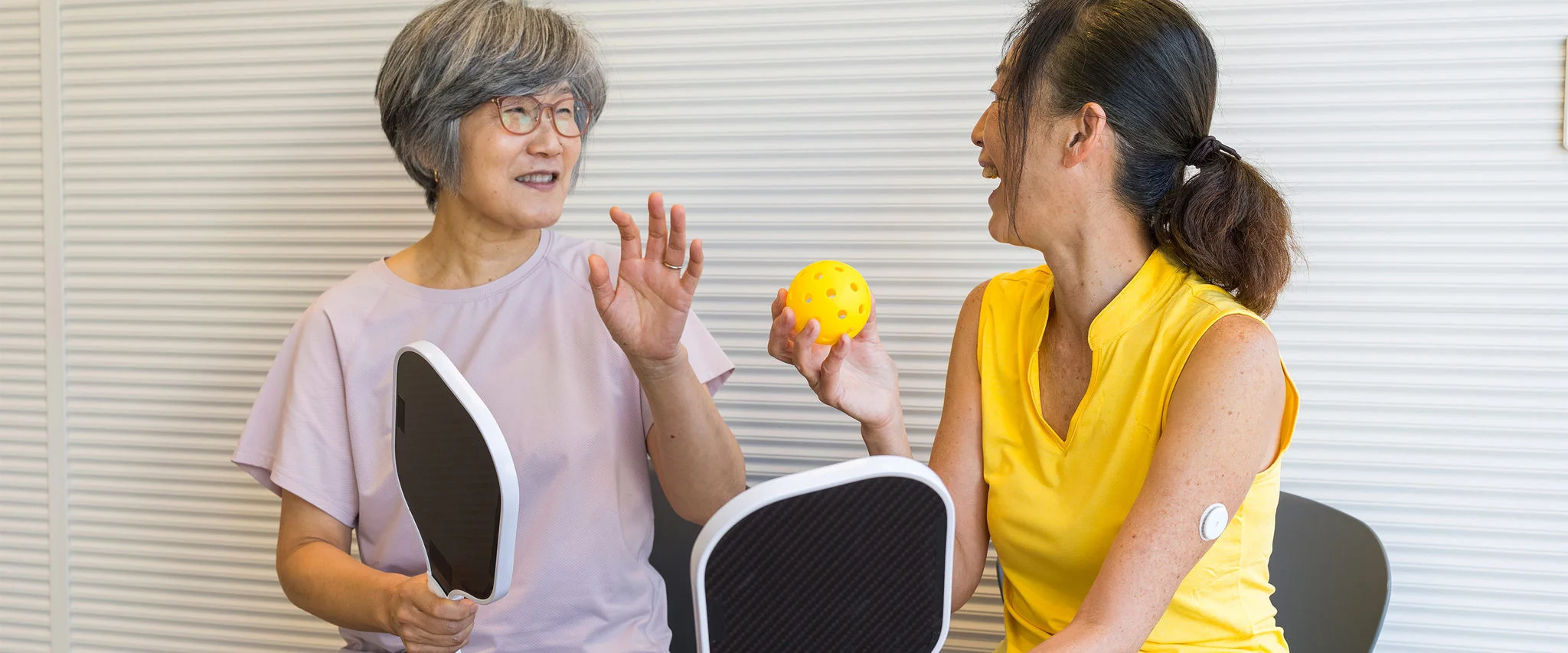
When it comes to physical fitness, there seem to be lots of “rules.” Spend at least this much time on strength training each week. Do a certain amount of moderate aerobic activity every week. Reach your target heart rate for so many minutes. While all may be worthwhile goals, any one of them can be a bit intimidating.
If you’re living with diabetes, you may feel like you have enough guidelines to follow. A good start, however, may simply come from incorporating a little more physical activity into each day. There are a host of benefits333,334.
Being active333,334:
makes your body more sensitive to insulin – a good thing!
helps control glucose levels
could lead to a lower A1c level over time
lowers your risk of heart disease and nerve damage
helps you lose or maintain weight
makes you feel happier and sleep better
improves your memory
and controls blood pressure and cholesterol

Get up and move, but start slowly
Fortunately, your physical activities don’t need to be hard, time-consuming or complicated. The key? Move more, have fun and keep at it. Remember that every step is one more than you did before333,334.
Start slowly. That allows you to experiment and figure out what you like, don’t like and love doing. A slow start also helps you not to overdo activities, risking injury331,333,334,335.
Small changes can have a big impact
One easy way to begin is to try a physical activity for 5 minutes, once a day. Then increase that activity by one minute each day. In a little more than two weeks, you’re doing the same activity for 20 minutes.
Try checking your glucose level before and then after an activity. If you take insulin and your glucose levels are below 5.6mmol/L, you may need a snack before you begin333,334. And be sure to drink plenty of fluids while you’re on the move333,334.
Another easy way to incorporate more activity into each day is to:
Park farther away from wherever you’re going
Take the stairs up a flight or two (or more)
Get up and move during TV commercials
6 fun fitness ideas
Dance while you do chores around the house (it helps if you crank up your favorite music)
Take up gardening (pulling weeds can be liberating)
Walk with your dog, a friend or significant other
Skip rope (it’s not just for kids)
Try yoga or tai chi (take a class or find videos online)
Grab friends or family and go geocaching, a “treasure” hunt/hike by GPS
Get to know your unique body
To exercise safely, you may need to track your glucose levels before, during and after physical activity, especially if you take insulin. Seeing your glucose level and where it’s headed will not only show you how your body responds to exercise, but can also help prevent hypoglycemia332,39,4.
A continuous glucose monitor (CGM) like the Libre 2 Plus system has a small, wearable sensor that tracks your glucose levels and sends them to your LibreLink app12 or reader. You get real-time readings without any fingersticks10.
The Libre 2 Plus system also features glucose trend arrows that can show you where you’re headed. That’s especially helpful while you’re physically active. Knowing your glucose is dropping quickly can help you take action to avoid hypoglycemia332.
Plus, with your LibreLink app12 you can add notes on your glucose graph for exercise. So, if one activity lowers your glucose more than another, or for longer432, you can record that on your app. That way, you’ve got a better picture of your own body’s response to different activities.
Which means you’ve got progress in sight.

Join the 7 million people who use the Libre systems worldwide1.
Learn more about the Libre 2 Plus systems today.

Helping you progress is part of the program.
As a member of Libre Care, we will keep you informed about important information designed to enhance your Libre experience.

More articles you may like.

5 ways to keep hypoglycemia at bay.
Is your glucose level dropping too low? These tips will help you to manage it.
.jpg)
Use physical activity to win against the stress of diabetes.
Small steps add up to big wins. Learn how movement may help ease diabetes distress and boost well-being.

Eat right on the go: 7 healthy snacks for diabetes.
Need something fast and healthy? These 7 quick snack ideas can help you stay fueled, satisfied, and on track with your goals.
ADC-2689380 v1.0