

CGM vs. BGM: What’s the difference?

A continuous glucose monitor (CGM) provides a clearer picture of your data over time17. A blood glucose monitor (BGM) uses a finger prick to give you a snapshot of data in one moment617. Continuous tracking means no BGM interruptions at dinner.

A woman wearing a FreeStyle Libre sensor while checking glucose data on a smartphone near a swimming pool.
A close up image of a FreeStyle Libre sensor on the back of a person's arm.

What is continuous glucose monitoring?

CGMs check your glucose levels continuously. The FreeStyle Libre 2 Plus system gives accurate5, real-time glucose readings with a glance at your smartphone34. No finger pricks needed10.
A person testing their glucose using a blood glucose monitor.

What is blood glucose monitoring?

BGMs measure blood glucose directly from a small sample of blood taken from a finger prick32. BGMs consist of a monitor, test strips, a lancing device, and lancets.

A CGM, like your Libre 2 Plus, is like a movie—showing you the complete, ongoing picture17 of how your glucose changes over time.

As glucose travels, it may take a few minutes for your CGM reading to reflect your BGM reading32. That’s why minute-to-minute CGM readings give you a clearer picture: they help you spot highs and lows in real time, including the changes that can occur between finger pricks.

A blood glucose monitor (BGM) is like a photo—it gives you a single reading by measuring glucose directly from your blood with a finger prick.
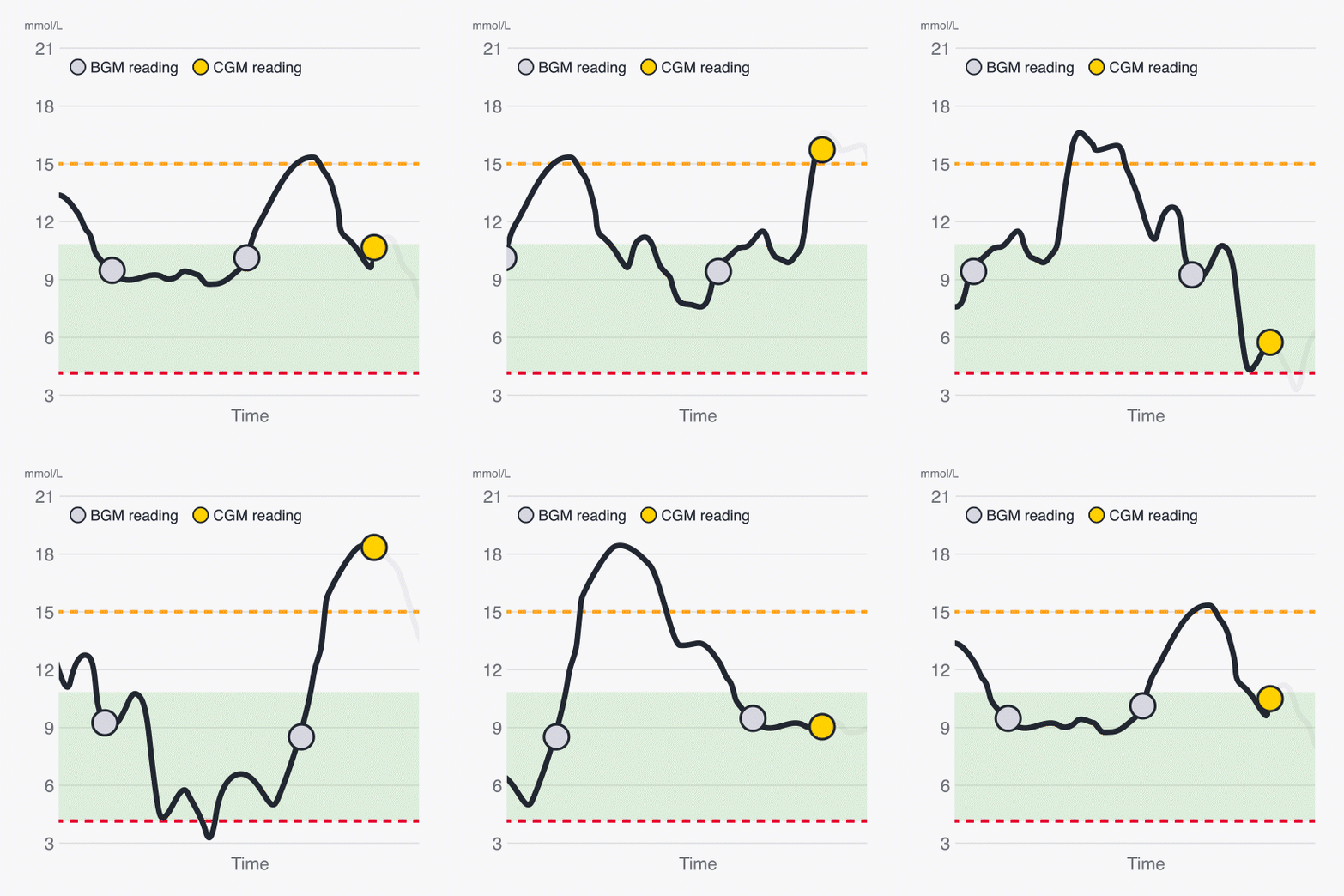
Animated graph showing the continuous monitoring that CGMs provide in comparison to BGMs.
Graph is for illustrative purposes only. Not real patient data.

Why don’t my CGM and BGM readings always match?

CGMs and BGMs measure the same glucose levels, but where and when they measure them is slightly different32.

How glucose travels through the body:

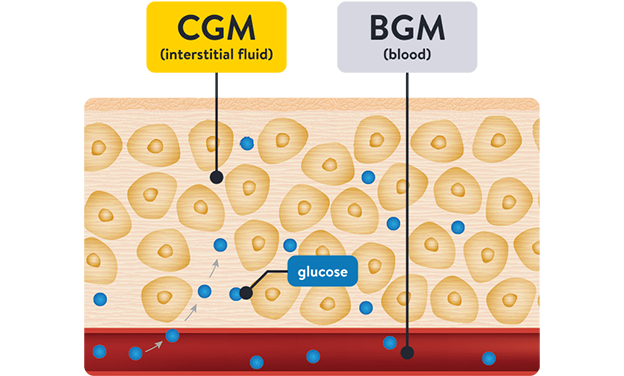
  1. Glucose first enters your bloodstream. This is when a BGM measures glucose, showing your levels at just one point in time32.
  2. Glucose then moves into the interstitial fluid (ISF) that surrounds your cells beneath your skin32. This is when a CGM measures glucose, showing how your levels are changing over time.
A diagram showing that CGMs measure glucose in interstitial fluid, while BGMs measure it in the blood.

CGMs measure glucose at a different point in time than BGMs, but readings are still accurate32.

Because glucose takes time to move from your blood into your ISF, your readings may differ—especially when your levels are changing quickly.

Glucose reading vs sensor reading

Here's a video tutorial to help show how blood glucose readings are different to sensor readings

Benefits of CGM vs. BGM.

A CGM helps you know when glucose is too low, too high, or right where it should be, empowering you to make decisions about your glucose more easily.
An icon showing a blood droplet with a line crossed through it.
No finger pricks10

Sensors measure glucose in the fluid under your skin32, decreasing the need for finger pricks10.

An icon showing a smartphone app with a clock inset.
Real-time glucose insights8

Track your glucose in real-time, all day long8.

An icon showing a glucose graph.
Complete glucose picture17

See patterns and trends that show the impact of every meal, every workout, and every dose8.

An icon showing an alarm bell.
Low and high glucose alarms18

Know when glucose goes above or below the level you set18.

An icon showing an arrow pointing down indicating lower A1c values
Lower A1c39,27

Significantly lower your A1c39,27 without finger pricks10.

FAQs

CGMs measure glucose at a different point in time than BGMs, but readings are still accurate32.

Blood, which contains glucose, flows through the arteries into the capillaries, where some fluid is released into the surrounding tissue32. The ISF32 also contains glucose. A CGM sensor measures the glucose within ISF32 on an ongoing basis, while a blood glucose monitor (BGM) measures the glucose within your blood32 at just one moment in time32.

If you think your CGM sensor readings are incorrect, speak with your healthcare provider.

CGMs are useful for people with diabetes who are at risk for hypoglycemia and are frequently used in people with Type 1 diabetes. CGMs may also be useful for those with other types of diabetes who are taking insulin, such as Type 2 diabetes453.

Glucose is the main sugar found in your blood and is used by your body as fuel.

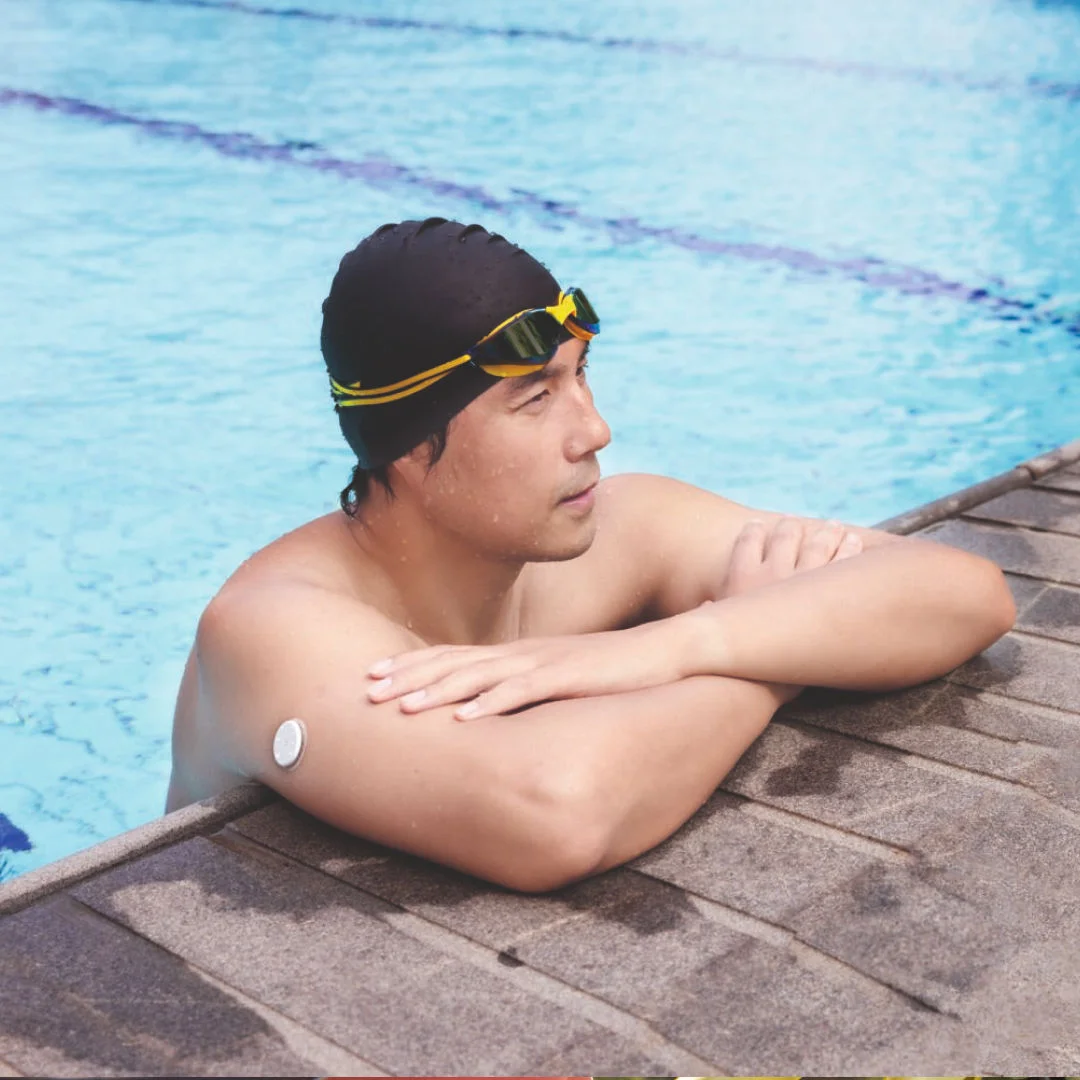
A man swimming with with a FreeStyle Libre sensor visible on the his upper arm.

Ready to make the switch?

FreeStyle Libre 2 Plus systems are the first step in your journey toward better diabetes management.

Product images for illustrative purposes only. Not actual patient data.

ADC-2689378 v1.0