


Glucose and ketone levels don’t always trend in the same direction3.
Ketones can be high even when your glucose looks normal.
The world’s first dual glucose ketone sensor‖ is coming soon.
The U.S. Food and Drug Administration (FDA) has authorized the Libre DUO 10 Day system. Soon, you’ll be able to see your glucose and ketone readings from one sensor.
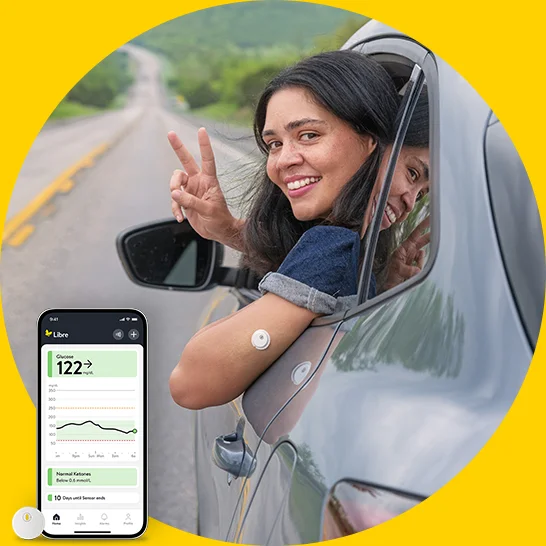
Glucose and ketone levels don’t always trend in the same direction3.
Ketones can be high even when your glucose looks normal.

Symptoms can look like the flu2.
Early signs of DKA can be easy to mistake for another illness.

DKA can develop quickly4.
Without timely action, rising ketones can quickly progress to DKA.
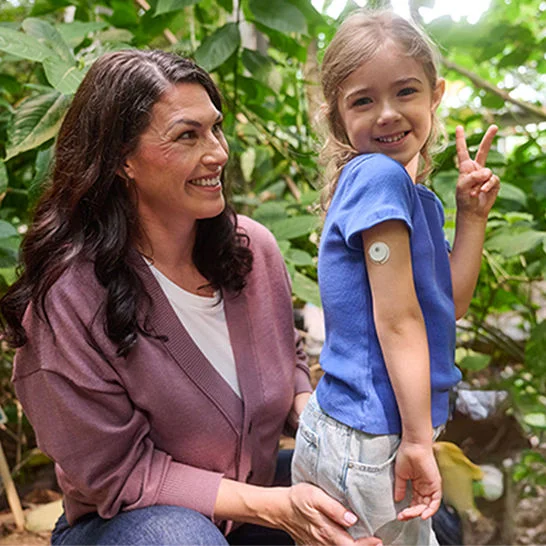



DUO does more*1 by monitoring glucose and ketones—so you can worry less†.
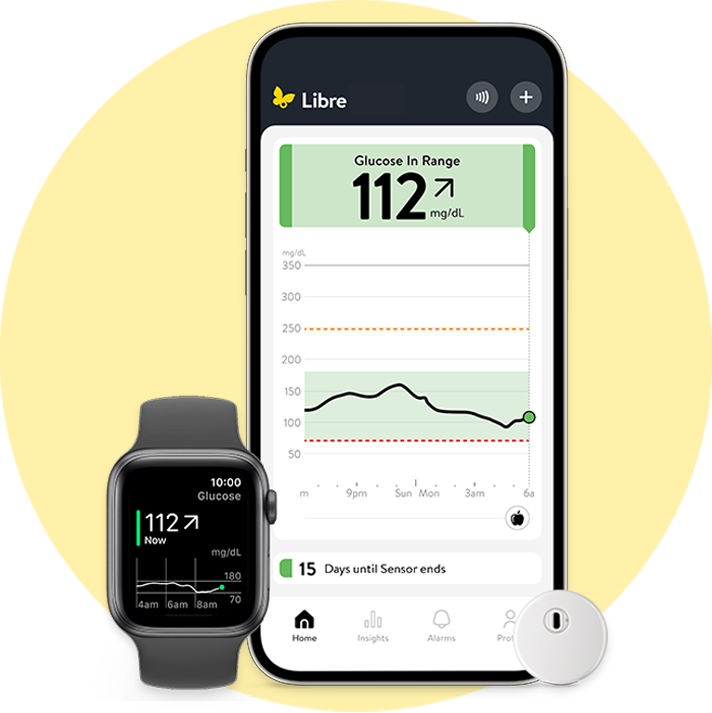
You don’t have to wait to try a Libre sensor. Get started with a Libre systems sensor today.
Easily see your glucose levels with a quick glance at your smartphone‡. Your first sensor may be free♢.


Libre DUO 10 Day system is authorized to be used by children 2 years and older.
Libre Duo 10 Day sensor: The clinical studies found that 84.1% of sensors used by adults and 68.8% of sensors used by pediatrics lasted the full 10 days.
* The Libre DUO 10 Day system does more compared to continuous glucose monitoring and traditional ketone testing (urine ketone monitoring, blood ketone monitoring).
† Based on ketone alerts and readings.
‡ The Libre app is only compatible with certain mobile devices and operating systems. Please check the Support section of our website for more information about device compatibility before using the apps. Use of the Libre app may require registration with LibreView.
§ Alarm notifications will only be received when alarms settings are enabled and turned on and sensor is within 33 feet unobstructed of the reading device.
|| Based on current public available information.
References: 1. Dhatariya, Ketan, et al. “Continuous Ketone Monitoring for People with Diabetes: International Expert Recommendations on the Application of a New Technology.” The Lancet Diabetes & Endocrinology 14, no. 1 (2026). https://doi.org/10.1016/S2213-8587(25)00331-6. 2. American Diabetes Association. “Managing Ketones with Diabetes.” Accessed September 19, 2026. https://diabetes.org/living-with-diabetes/managing-ketones. 3. American Diabetes Association Professional Practice Committee for Diabetes. “16. Diabetes Care in the Hospital: Standards of Care in Diabetes—2026.” Diabetes Care 49, suppl. 1 (2026): S339–S355. https://doi.org/10.2337/dc26-S016. 4. American Diabetes Association. “DKA: Signs, Symptoms, and Treatment.” Accessed September 19, 2026. https://diabetes.org/living-with-diabetes/dka. 5. Alva, Shridhara, et al. “Accuracy of a 15-Day Factory-Calibrated Continuous Glucose Monitoring System with Improved Sensor Design.” Journal of Diabetes Science and Technology (2025): 19322968251329364. https://doi.org/10.1177/19322968251329364. 6. Libre DUO 10 Day system User Manual.
Important Safety Information
Failure to use the Libre Duo 10 Day system as instructed in labeling may result in missing a severe glucose and/or ketones event and/or making a treatment decision, resulting in injury. If readings and alarms (if enabled) do not match symptoms or expectations, use a fingerstick glucose value from a blood glucose meter for treatment decisions. Ketone output should be used in conjunction with glucose levels. The Urgent Low Glucose alarm and Urgent High Ketones alarm may not detect all instances of glucose less than 55 mg/dL and ketones higher than 3.0 mmol/L, so these should be used together with respective sensor readings for treatment decisions. Get medical attention when appropriate. For more information call Abbott Customer Service at 855-632-8658.
The "Yes" link below will take you out of the Abbott Laboratories family of websites. Links which take you out of Abbott Laboratories worldwide web sites are not under the control of Abbott Laboratories, and Abbott Laboratories is not responsible for the contents of any such site or any further links from such site. Abbott Laboratories is providing these links to you only as a convenience, and the inclusion of any link does not imply endorsement of the linked site by Abbott Laboratories.
Do you wish to leave this site?