


Most affordable#6
Less than half the cost of other CGMs**6
A CGM is a system that pairs a small sensor—worn on the back of your upper arm—with an app* or reader† that provides you with real-time glucose (commonly known as sugar) levels 24/7‡.
Take your first step toward progress today.
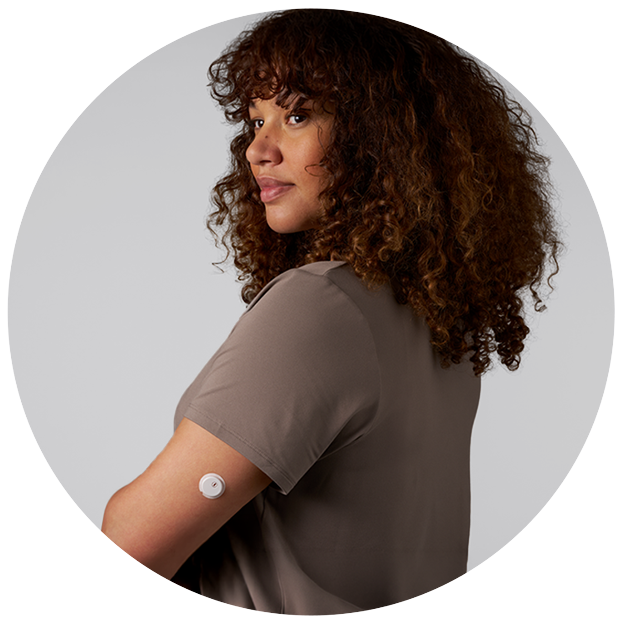
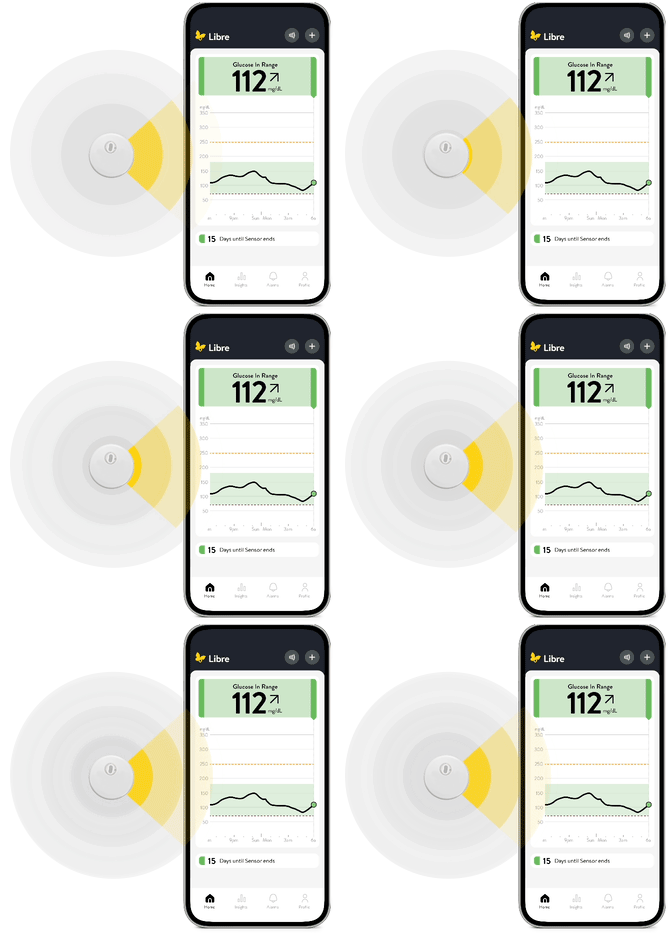
A CGM is a system that connects a small sensor worn on your body with an app* or reader†.
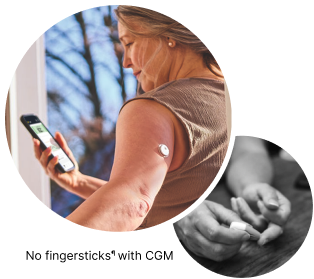
The sensor automatically sends your glucose readings straight to your smartphone*. Check your glucose anytime‡ with just a glance at your smartphone.
With CGMs, like the FreeStyle Libre systems, you can see how food, activity, and insulin affect your glucose.
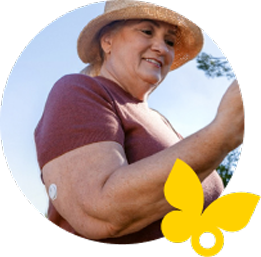
— Dawn, FreeStyle Libre 3 Plus sensor user
Less than half the cost of other CGMs**6


Data lives on your smartphone*
When you decide to, you can easily share‡‡ glucose readings with loved ones and your healthcare team to keep them in the loop§§
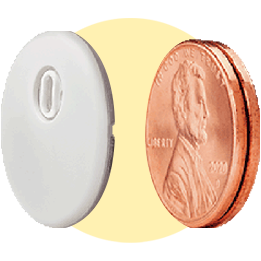
The Libre 3 Plus sensor is the thinnest||||, most discreet6 sensor—smaller than 2 stacked pennies. No one needs to know you’re wearing it!
You and your fingertips¶ will wonder what you ever did without the Libre 3 Plus sensor! See for yourself in this short video.
Enhance your diabetes management||8 today with Libre systems.
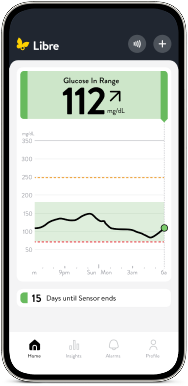
Insights, a tap away. Discover the Libre app*.
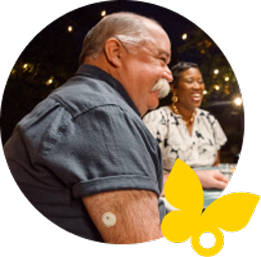
— Sean Hughes, FreeStyle Libre 3 Plus user
Myth: CGM is only for people with type 1 diabetes.
Fact: Libre CGM systems are for anyone managing diabetes†††‡‡‡.
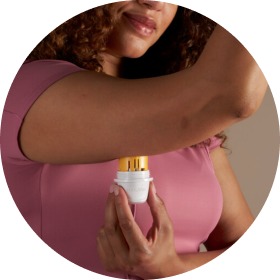
Myth: CGMs are painful to apply and wear.
Fact: The Libre 3 Plus sensor can be applied quickly and painlessly7.
Unlike fingersticks¶, Libre CGM systems do not require needles multiple times a day.
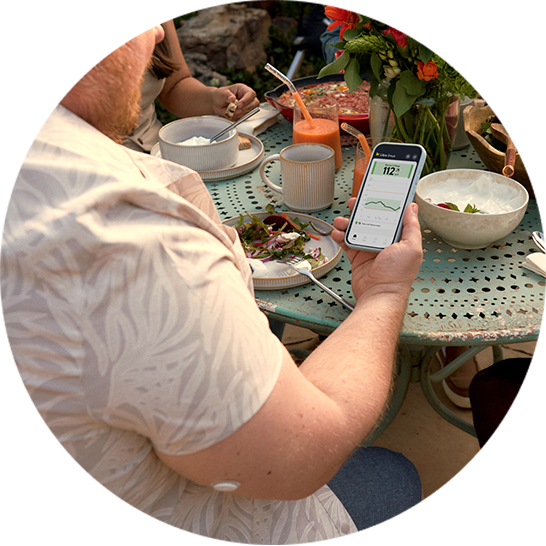
Myth: CGMs only help with high glucose (commonly known as sugar).
Fact: Libre CGM systems track glucose trends in real time.
Libre CGM systems can help you manage highs (hyperglycemia) and lows (hypoglycemia) by alerting*** you when changes occur.
CGMs, like the Libre systems’ sensors, are painlessly applied7 to the back of your upper arm. Libre systems’ sensors continuously measure and store glucose readings when worn on your body.
Glucose readings are displayed on your smartphone* or reader†. The sensor sends your data to your smartphone or reader where you can view your glucose readings, reports, and trends anytime‡, anywhere¶¶.
* The FreeStyle Libre systems apps are only compatible with certain mobile devices and operating systems. Please check the Support section of our website for more information about device compatibility before using the apps. Use of the FreeStyle Libre systems apps may require registration with LibreView.
† The FreeStyle Libre systems apps and the FreeStyle Libre systems readers have similar but not identical features. Fingersticks are required for treatment decisions when you see Check Blood Glucose symbol and when your glucose alarms and readings from the system do not match symptoms or expectations.
‡ 60-minute warm-up required when starting the sensor.
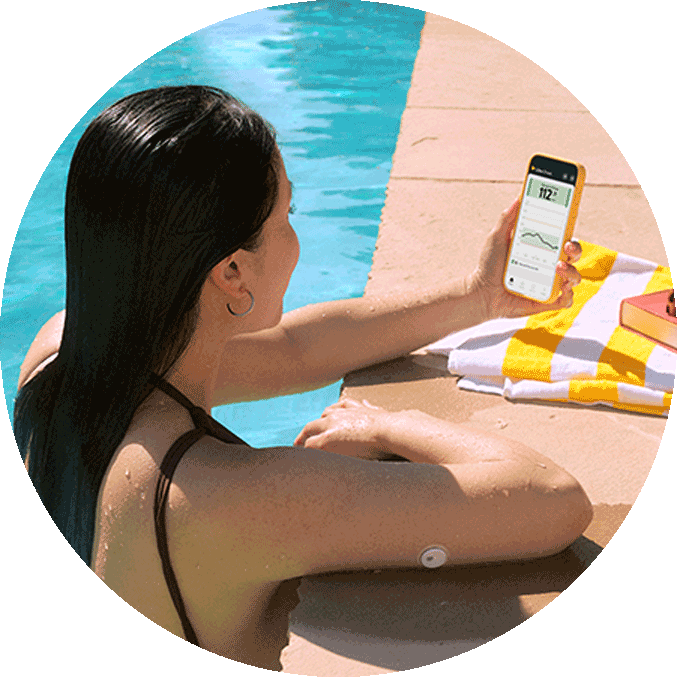
¶¶ Sensor is water-resistant in up to 1 meter (3 feet) of water. Do not immerse longer than 30 minutes.
Reference: 7. Alva, Shridhara, et al. “Accuracy of a 15-day Factory-Calibrated Continuous Glucose Monitoring System with Improved Sensor Design.” Journal of Diabetes Science and Technology (2025): 19322968251329364. https://doi.org/10.1177/19322968251329364.
The Libre 3 Plus sensor is indicated for use to be worn on the back of the upper arm.
The Libre 3 Plus sensor is the world’s smallest sensor||||6. It’s worn discreetly6 on the back of your upper arm and can be hidden under clothing.
|||| Among patient-applied sensors.
Reference: 6. Data on file. Abbott Diabetes Care, Inc.
Libre systems sensors can be applied painlessly7. A tiny needle is used only to insert the sensor—it does not stay in your arm.
Reference: 7. Alva, Shridhara, et al. “Accuracy of a 15-day Factory-Calibrated Continuous Glucose Monitoring System with Improved Sensor Design.” Journal of Diabetes Science and Technology (2025): 19322968251329364. https://doi.org/10.1177/19322968251329364.


The views expressed should not be used for medical diagnosis or treatment or as a substitute for professional medical advice. Individual symptoms, situations and circumstances may vary.
The FreeStyle Libre 3 system includes the Libre 3 Plus sensor, Libre 3 sensor, Libre 3 app, Libre app, and the Libre 3 reader.
Medicare and other payor criteria may apply. Abbott provides this information as a courtesy and does not guarantee payment or coverage. Coverage and out-of-pocket costs may vary based on your individual insurance plan. Please contact your insurance provider directly to confirm your specific benefits and eligibility.
* The FreeStyle Libre systems apps are only compatible with certain mobile devices and operating systems. Please check the Support section of our website for more information about device compatibility before using the apps. Use of the FreeStyle Libre systems apps may require registration with LibreView.
† The FreeStyle Libre systems apps and the FreeStyle Libre systems readers have similar but not identical features. Fingersticks are required for treatment decisions when you see Check Blood Glucose symbol and when your glucose alarms and readings from the system do not match symptoms or expectations.
‡ 60-minute warm-up required when starting the sensor.
§ Study was performed with the outside US version of the FreeStyle Libre 2 system. Data is applicable to FreeStyle Libre 3 system, as feature sets are similar.
|| Study was performed with the outside US version of the FreeStyle Libre 14 day system. Data is applicable to FreeStyle Libre 2 and FreeStyle Libre 3 systems, as feature sets are similar as FreeStyle Libre 14 day system, excluding alarms.
¶ Fingersticks are required if your glucose alarms and readings do not match symptoms or when you see Check Blood Glucose symbol during the first twelve hours.
# Based on prescription claims for commercially insured or uninsured patients starting on the FreeStyle Libre 3 systems compared to competitor CGMs. Does not include Medicare, Medicaid, and other federal or state healthcare program patients. The actual cost to patients may or may not be lower than other CGM systems, depending on the amount covered by insurance, if any.
** Based on a comparison of list prices of the FreeStyle Libre 3 system versus competitors’ prescription CGM systems, assuming annual use of one receiver (or equivalent hardware) and quantity of transmitters and/or sensors according to use life. The actual cost to patients may or may not be lower than other CGM systems, depending on the amount covered by insurance, if any.
†† Benefits for FreeStyle Libre 3 apply to FreeStyle Libre 3 sensors and readers. Void where prohibited by law. Abbott may modify, rescind, or revoke these benefits at any time without notice. Offer available to commercially insured and uninsured patients only. These benefits are not available to beneficiaries of Medicare, Medicaid or other federal or state healthcare programs. For Massachusetts residents, only those patients responsible for the full cost of the product may be eligible to receive these benefits. These benefits are only available at participating pharmacies, which are subject to change without notice. The actual amount a patient pays may vary.
‡‡ The user’s device must have internet connectivity for glucose data to automatically upload to LibreView.
§§ The FreeStyle Libre systems apps are designed to facilitate data sharing between patients and their healthcare providers and caregivers.
|||| Among patient-applied sensors.
¶¶ Sensor is water-resistant in up to 1 meter (3 feet) of water. Do not immerse longer than 30 minutes.
## MRI Safety Conditions: Sensor readings may be compromised during the MRI, but System function returns fully back to normal after 1 hour. Scanning between the pelvis and sternum (3T scanners) should be limited to 12 minutes maximum with a cooling period of 2 minutes in between scans. All other areas (1.5T scanners) can scan for up to 1 hour continuously without a cooling period.
*** Alarm notifications will only be received when alarms settings are enabled and turned on and sensor is within 20 feet (FreeStyle Libre 2) or 33 feet (FreeStyle Libre 3) unobstructed of the reading device.
††† FreeStyle Libre 3 system is cleared to be used by children 4 years and older with Libre 3 sensor and 2 years and older with Libre 3 Plus sensor.
‡‡‡ FreeStyle Libre 2 system is cleared to be used by children 4 years and older with Libre 2 sensor and 2 years and older with Libre 2 Plus sensor.
§§§ Study was performed with the US version of the FreeStyle Libre 14 day system. Data is applicable to FreeStyle Libre 3 and FreeStyle Libre 2 systems, as feature sets are similar as FreeStyle Libre 14 day system, excluding alarms.
|||||| Retrospective observational study with average baseline A1C 10.1% ± 1.7%.
¶¶¶ Real-world analysis of changes in A1C with the addition of FreeStyle Libre systems among adults with T2D currently using GLP-1 therapy (N=1,454).
References: 1. Leelarathna, Lalantha, et al. “Intermittently Scanned Continuous Glucose Monitoring for Type 1 Diabetes.” New England Journal of Medicine 387, no. 16 (2022): 1477–1487. https://doi.org/10.1056/nejmoa2205650. 2. Evans, Mark, Zoë Welsh, and Alexander Seibold. “Reductions in HbA1c With Flash Glucose Monitoring Are Sustained for up to 24 Months: A Meta-analysis of 75 Real-world Observational Studies.” Diabetes Therapy 13, no. 6 (2022): 1175–1185. https://doi.org/10.1007/s13300-022-01253-9. 3. FreeStyle Libre 3 and FreeStyle Libre 2 User Manuals. 4. Evans, Mark, Zöe Welsh, Sara Ells, and Alexander Seibold. “The Impact of Flash Glucose Monitoring on Glycaemic Control as Measured by HbA1c: a Meta-analysis of Clinical Trials and Real-world Observational Studies.” Diabetes Therapy 11, no. 1 (2020): 83–95. https://doi.org/10.1007/s13300-019-00720-0. 5. Bolinder, Jan, et al. “Novel Glucose-Sensing Technology and Hypoglycaemia in Type 1 Diabetes: a Multicentre, Non-masked, Randomised Controlled Trial.” The Lancet 388, no. 10057 (2016): 2254–2263. https://doi.org/10.1016/S0140-6736(16)31535-5. 6. Data on file. Abbott Diabetes Care, Inc. 7. Alva, Shridhara, et al. “Accuracy of a 15-day Factory-Calibrated Continuous Glucose Monitoring System with Improved Sensor Design.” Journal of Diabetes Science and Technology (2025): 19322968251329364. https://doi.org/10.1177/19322968251329364. 8. Fokkert, Marion, et al. “Improved Well-Being and Decreased Disease Burden After 1-Year Use of Flash Glucose Monitoring (FLARE-NL4).” BMJ Open Diabetes Research & Care 7, no. 1 (2019): e000809. https://doi.org/10.1136/bmjdrc-2019-000809. 9. Wright, Eugene E Jr, et al. “Use of Flash Continuous Glucose Monitoring Is Associated With A1C Reduction in People With Type 2 Diabetes Treated With Basal Insulin or Noninsulin Therapy.” Diabetes Spectrum 34, no. 2 (2021): 184–189. ds200069. https://doi.org/10.2337/ds20-0069. 10. Miller, Eden, et al. “Association of Changes in A1C Following Continuous Glucose Monitoring Acquisition in People with Sub‐Optimally Treated Type 2 Diabetes Taking GLP‐1 RA Therapy.” Diabetes Therapy 15 (2024): 2027–2038. https://doi.org/10.1007/s13300-024-01619-1.
The "Yes" link below will take you out of the Abbott Laboratories family of websites. Links which take you out of Abbott Laboratories worldwide web sites are not under the control of Abbott Laboratories, and Abbott Laboratories is not responsible for the contents of any such site or any further links from such site. Abbott Laboratories is providing these links to you only as a convenience, and the inclusion of any link does not imply endorsement of the linked site by Abbott Laboratories.
Do you wish to leave this site?