


Painless
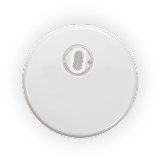
The Libre 3 Plus sensor is painless to apply5 and comfortable to wear5 for 15 days—no fingersticks*!
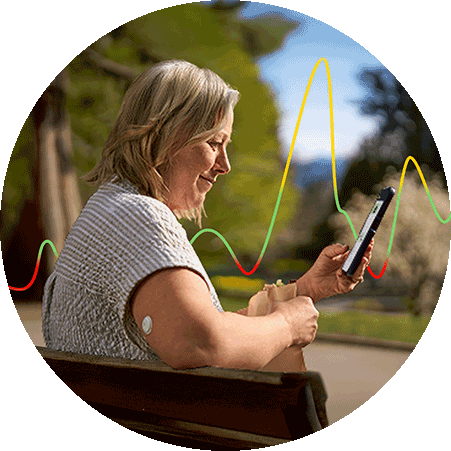
Libre CGM systems send glucose readings every minute of the day right to your smartphone||.
BGM measures only a single point in time when you use a fingerstick.
Glucose levels can be checked two ways. Watch the video to see how.
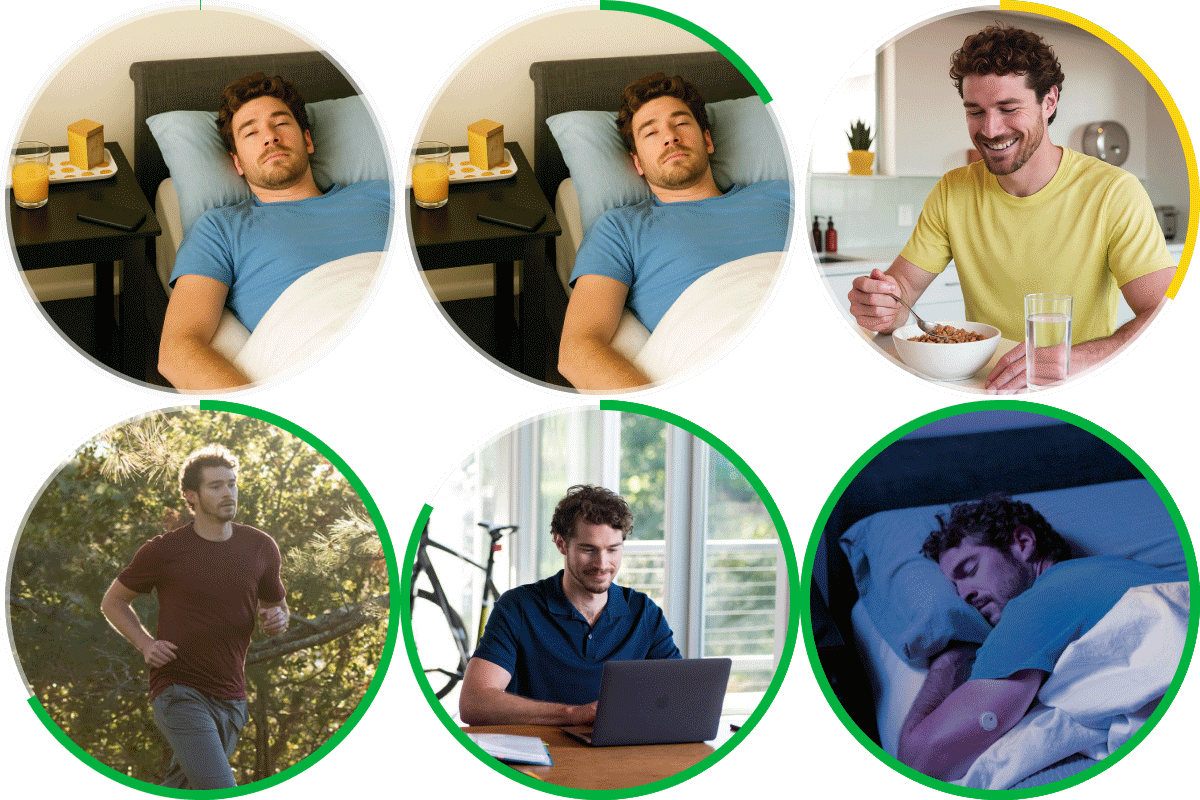
The Libre 3 Plus sensor delivers accurate4 glucose readings straight to your smartphone|| every minute, around the clock†.
You can see how much last night’s pasta dinner impacted your glucose numbers—and how much your morning walk helped bring them down.
And with a sensor that lasts up to 15 days, it’s one less thing to think about.
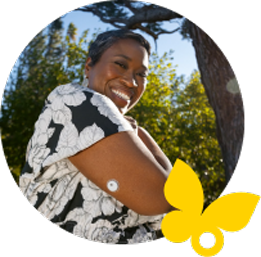
— Jeniese, FreeStyle Libre 3 Plus sensor user
The views expressed should not be used for medical diagnosis or treatment or as a substitute for professional medical advice. Individual symptoms, situations and circumstances may vary.

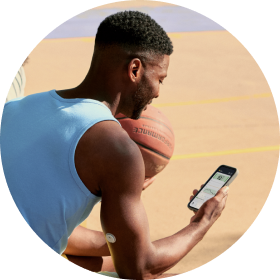
Myth: CGMs just tell me what I already know from fingersticks.
Fact: Libre CGM systems do so much more than fingersticks*!
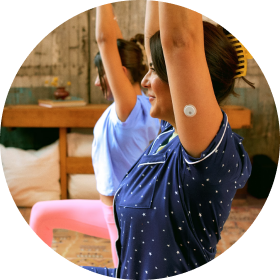
Myth: CGM is a last resort for people with diabetes.
Fact: Libre CGM systems are a proactive step toward better glucose management**7,¶8.
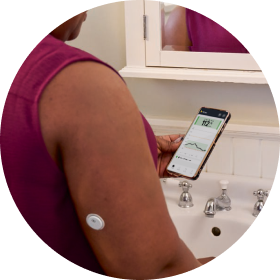
Myth: CGM readings don’t match BGM readings, so CGM is not accurate.
Fact: Libre CGM systems provide real-time glucose readings along with trend arrows that indicate the direction your glucose levels are heading. Whereas BGM devices only offer your glucose reading at that moment.
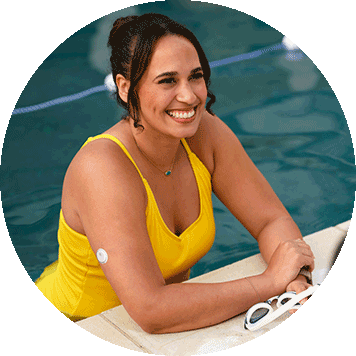
Myth: CGM sensors fall off easily, especially during workouts or showers.
Fact: Libre CGM systems are designed to be water-resistant§.
Now that you know the facts, ask your healthcare provider if Libre systems are right for you.
While Libre CGM systems significantly reduce the need for fingersticks*, occasional checks may still be needed for calibration or double-checking unusual readings.
Talk to your healthcare provider about when you may need to use fingersticks.
* Fingersticks are required if your glucose alarms and readings do not match symptoms or when you see Check Blood Glucose symbol during the first twelve hours.
Glucose readings from your Libre 3 Plus sensor are accurate. It has been well-studied in a clinical trial and shown to provide glucose information that you can use to safely make treatment decisions4.
The clinical trial also showed that the Libre 3 Plus sensor not only met but exceeded the FDA’s strict standards for accuracy performance4,9.
References: 4. FreeStyle Libre 3 User Manual. 9. Based on FDA iCGM special controls. Accessed September 9, 2026. https://www.ecfr.gov/current/title-21/chapter-I/subchapter-H/part-862/subpart-B/section-862.1355.
The Libre 3 Plus sensor has an adhesive to securely stick onto clean, dry skin for up to 15 days. The Libre 3 Plus sensor is designed to be water-resistant and stick well, even while bathing, swimming§, exercising, and during an MRI††.
§ Sensor is water-resistant in up to 1 meter (3 feet) of water. Do not immerse longer than 30 minutes.
†† MRI Safety Conditions: Sensor readings may be compromised during the MRI, but System function returns fully back to normal after 1 hour. Scanning between the pelvis and sternum (3T scanners) should be limited to 12 minutes maximum with a cooling period of 2 minutes in between scans. All other areas (1.5T scanners) can scan for up to 1 hour continuously without a cooling period.
Data from Libre systems live on your personal device. You are in control of who is able to view the information and when.

The FreeStyle Libre 3 system includes the Libre 3 Plus sensor, Libre 3 sensor, Libre 3 app, Libre app, and the Libre 3 reader.
Medicare and other payor criteria may apply.
* Fingersticks are required if your glucose alarms and readings do not match symptoms or when you see Check Blood Glucose symbol during the first twelve hours.
† 60-minute warm-up required when starting the sensor.
‡ Study was performed with the US version of the FreeStyle Libre 14 day system. Data is applicable to FreeStyle Libre 3 and FreeStyle Libre 2 systems, as feature sets are similar as FreeStyle Libre 14 day system, excluding alarms.
§ Sensor is water-resistant in up to 1 meter (3 feet) of water. Do not immerse longer than 30 minutes.
|| The FreeStyle Libre systems apps are only compatible with certain mobile devices and operating systems. Please check the Support section of our website for more information about device compatibility before using the apps. Use of the FreeStyle Libre systems apps may require registration with LibreView.
¶ Study was performed with the outside US version of the FreeStyle Libre 14 day system. Data is applicable to FreeStyle Libre 3 and FreeStyle Libre 2 systems, as feature sets are similar as FreeStyle Libre 14 day system, excluding alarms.
# Alarm notifications will only be received when alarms settings are enabled and turned on and sensor is within 20 feet (FreeStyle Libre 2) or 33 feet (FreeStyle Libre 3) unobstructed of the reading device.
** Study was performed with the outside US version of the FreeStyle Libre 2 system. Data is applicable to FreeStyle Libre 3 system, as feature sets are similar.
References: 1. Unger, Jeff, Pamela Kushner, and John E. Anderson. “Practical Guidance for Using the FreeStyle Libre Flash Continuous Glucose Monitoring in Primary Care.” Postgraduate Medicine 132, no. 4 (2020): 305–313. https://doi.org/10.1080/00325481.2020.1744393. 2. Fokkert, Marion, et al. “Improved Well-Being and Decreased Disease Burden After 1-Year Use of Flash Glucose Monitoring (FLARE-NL4).” BMJ Open Diabetes Research & Care 7, no. 1 (2019): e000809. https://doi.org/10.1136/bmjdrc-2019-000809. 3. Stone, Jenine Y., and Timothy S. Bailey. “Benefits and Limitations of Continuous Glucose Monitoring in Type 1 Diabetes.” Expert Review of Endocrinology & Metabolism 15, no. 1 (2020): 41–49. https://doi.org/10.1080/17446651.2020.1706482. 4. FreeStyle Libre 3 User’s Manual. 5. Alva, Shridhara, et al. “Accuracy of a 15-day Factory-Calibrated Continuous Glucose Monitoring System with Improved Sensor Design.” Journal of Diabetes Science and Technology (2025): 19322968251329364. https://doi.org/10.1177/19322968251329364. 6. FreeStyle Libre 2 User Manual. 7. Leelarathna, Lalantha, et al. “Intermittently Scanned Continuous Glucose Monitoring for Type 1 Diabetes.” New England Journal of Medicine 387, no. 16 (2022): 1477–1487. https://doi.org/10.1056/nejmoa2205650. 8. Evans, Mark, Zoë Welsh, and Alexander Seibold. “Reductions in HbA1c with Flash Glucose Monitoring Are Sustained for Up to 24 Months: a Meta-analysis of 75 Real-World Observational Studies.” Diabetes Therapy 13, no. 6 (2022): 1175–1185. https://doi.org/10.1007/s13300-022-01253-9.
The "Yes" link below will take you out of the Abbott Laboratories family of websites. Links which take you out of Abbott Laboratories worldwide web sites are not under the control of Abbott Laboratories, and Abbott Laboratories is not responsible for the contents of any such site or any further links from such site. Abbott Laboratories is providing these links to you only as a convenience, and the inclusion of any link does not imply endorsement of the linked site by Abbott Laboratories.
Do you wish to leave this site?