


Potential hypoglycemia symptoms include16:
- Sweating, chills, or clamminess
- Irritability or confusion
- Hunger or nausea
- Feeling sleepy, weak, or losing energy
- Tingling or numbness in the lips, tongue, or cheeks
- Shakiness or dizziness
Category: Diabetes Education
Category: Diabetes Education

When James woke up, he didn’t notice the usual signs of low glucose—just a heavy fatigue. Then, his FreeStyle Libre 3 system alarm* went off. “I was able to take immediate corrective action and avoid a tragic outcome,” James said1.
If you’ve experienced a worrisome hypoglycemia episode, you’re not alone2. “Hypos” can feel uncomfortable and embarrassing3, impacting work, sleep, relationships, and confidence in daily life4,5.
Fear of hypoglycemia can even lead some people with diabetes to run their glucose levels a bit high, just to avoid the risk of going low6—despite the health risks of high glucose7.
Continuous glucose monitoring (CGM) can help. With Libre systems, spend less time in low glucose (<70 mg/dL), both during the day and at night†8–9, and be notified the minute your glucose is too low*.

Hypoglycemia is when your glucose levels drop below your target range—usually below 70 mg/dL (3.9 mmol/L)10. It’s important to pay attention to early symptoms, though not everyone feels them at this level10.
Glucose levels below 54 mg/dL (3.0 mmol/L) can be dangerous10. Be sure to talk to your healthcare provider about your appropriate target range11.
Spotting early signs can help you catch lows and prevent them from becoming more serious.

Over time, repeated lows can lead to a risky condition called hypoglycemia unawareness, where you no longer feel the signs and symptoms of low glucose17.
CGMs such as Libre systems can help, as they track your glucose in real time, all day long‡ and offer optional alarms* that help you know when to take action.
Have you ever woken up drenched in sweat, felt groggy, or disoriented?
It could be nocturnal hypoglycemia—the low glucose episodes that happen while you’re asleep18.

With optional low-glucose alarms*, Libre systems help you take action early, even when you’re sleeping19–20.
Every hypo is an opportunity to learn how your body responds. And that knowledge? That’s progress.
Before making any changes to your routine, always consult your healthcare provider.
Get to know your low signs.
When you know how a low feels for you, it could be easier to catch it early next time13. But you can’t rely on your physical symptoms alone to detect lows17.
Libre systems offer real-time glucose alarms* that let you know when to take action19–20.
Check in at the moments that matter13.
Frequent glucose checks can mean a lower risk of low glucose13.
Libre systems offer minute-by-minute readings of glucose levels, with trend arrows that show where your glucose is heading19–20.
See your personalized trends and patterns.
With Libre systems, easily see patterns in your readings to learn how food, activity, and insulin impact your glucose§23.
Stay steady with meals.
Eating on a regular basis helps ensure your body has enough glucose12. Try pairing carbs with protein or fat to keep your glucose levels steadier14,21.
Snacks have your back.
A little juice, candy, or a glucose tab can help if your glucose drops. Keep some stashed in your bag, desk, or nightstand—just in case12.
Proactive hypoglycemia self-care isn’t about perfection. It’s about knowing your patterns, using your tools, and feeling ready to respond.
With Libre systems, you don’t have to navigate hypos alone.
/librelinkup/libre_butterfly.png)
Learn more about Libre systems today.
CGM = continuous glucose monitor(ing)
Ketones and DKA: symptoms, causes, and risks.
What ketones mean for diabetes—and how diabetic ketoacidosis can become serious.

Tips for managing hyperglycemia.
Learn what hyperglycemia is, common causes and symptoms, and practical tips to help manage high blood sugar.

Simple ways to feel less stress with diabetes.
Explore easy mindfulness exercises to help manage the stress of diabetes.
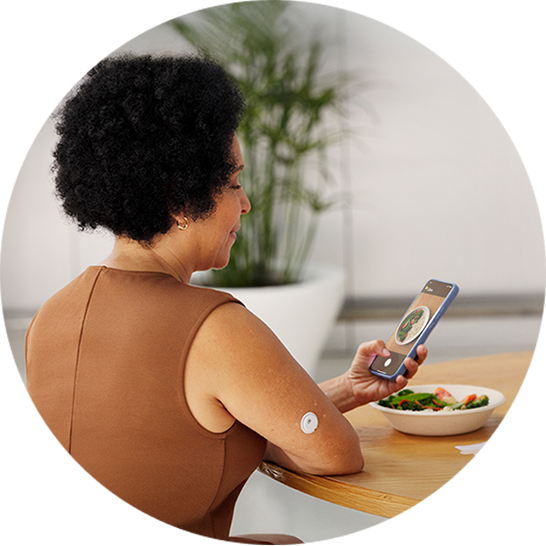
Make in-the-moment food choices.
The FreeStyle Libre 3 Plus sensor, along with Libre Assist¶, can help you predict the impact of food on your glucose**.
Snap.
Take a photo of your meal.
Predict.
Libre Assist¶ predicts how your food can impact glucose**.
Know.
Get personalized food suggestions†† to help lower glucose impact.
Want to try Libre systems and see how it works for yourself? Request a free♢ sensor now.
Share this article:


The views expressed should not be used for medical diagnosis or treatment or as a substitute for professional medical advice. Individual symptoms, situations and circumstances may vary.
The FreeStyle Libre 3 system includes the Libre 3 Plus sensor, Libre 3 sensor, Libre 3 app, Libre app, and the Libre 3 reader.
The FreeStyle Libre 2 system includes the Libre 2 Plus sensor, Libre 2 sensor, Libre app, and the Libre 2 reader.
FreeStyle Libre 3 system is cleared to be used by children 4 years and older with Libre 3 sensor and 2 years and older with Libre 3 Plus sensor.
FreeStyle Libre 2 system is cleared to be used by children 4 years and older with Libre 2 sensor and 2 years and older with Libre 2 Plus sensor.
Medicare and other payor criteria may apply.
* Alarm notifications will only be received when alarm settings are enabled and turned on and sensor is within 20 feet (FreeStyle Libre 2) or 33 feet (FreeStyle Libre 3) unobstructed of the reading device.
† Study was performed with the outside US version of the FreeStyle Libre 14 day system. Data is applicable to FreeStyle Libre 2 and FreeStyle Libre 3 systems, as feature sets are similar as FreeStyle Libre 14 day system, excluding alarms.
‡ 60-minute warm-up required when applying the sensor.
§ Study was performed with the US version of the FreeStyle Libre 14 day system. Data is applicable to FreeStyle Libre 2 and FreeStyle Libre 3 systems, as feature sets are similar as FreeStyle Libre 14 day system, excluding alarms.
|| Based on retail sales data for patients’ last-filled prescription, by manufacturer. ADC DME data based on internal reports, Dexcom DME data based on Dexcom earnings reports.
¶ Libre Assist is a feature within Libre app that uses generative artificial intelligence to provide information on how foods could impact your glucose levels. Generative artificial intelligence may not always be accurate, and it should not be used to make treatment decisions.
# The FreeStyle Libre systems apps are only compatible with certain mobile devices and operating systems. Please check the Support section of our website for more information about device compatibility before using the apps. Use of the FreeStyle Libre systems apps may require registration with LibreView.
** Predicted glucose impact is based on user-provided food data and may differ from actual impact, which depends on sensor readings and factors like activity, stress, medication, and alcohol. For personalized advice, consult your healthcare provider.
†† Personalized food suggestions are based on food preference information inputted by the user.
References: 1. Abbott FreeStyle Libre. User Generated Content. 2. American Diabetes Association. “Severe Hypoglycemia (Severe Low Blood Glucose).” Accessed September 9, 2026. https://diabetes.org/living-with-diabetes/hypoglycemia-low-blood-glucose/severe. 3. Polonsky, William H., Susan J. Guzman, and Lawrence Fisher. “The Hypoglycemic Fear Syndrome: Understanding and Addressing This Common Clinical Problem in Adults with Diabetes.” Clinical Diabetes 41, no. 4 (2023): 502–509. https://doi.org/10.2337/cd22-0131. 4. Chatwin, Hannah, et al. “‘Never Again Will I Be Carefree’: A Qualitative Study of the Impact of Hypoglycemia on Quality of Life Among Adults With Type 1 Diabetes.” BMJ Open Diabetes Research & Care 9 (2021): e002322. Accessed September 9, 2026. https://drc.bmj.com/content/9/1/e002322. 5. Wu, Chao, et al. “The Influence of Hypoglycemia on the Specific Quality of Life in Type 2 Diabetes Mellitus: A Comparative Cross-Sectional Study of Diabetics With and Without Hypoglycemia in Xi’an, China.” Health and Quality of Life Outcomes 19 (2021): 151. https://doi.org/10.1186/s12955-021-01790-0. 6. Przezak, Agnieszka, Weronika Bielka, Piotr Molęda. “Fear of Hypoglycemia—An Underestimated Problem.” Brain and Behavior 12, no. 7 (2022): e2633. https://doi.org/10.1002/brb3.2633. 7. Cleveland Clinic. “Hyperglycemia (High Blood Sugar).” Accessed September 9, 2026. https://my.clevelandclinic.org/health/diseases/9815-hyperglycemia-high-blood-sugar. 8. Haak, Thomas, et al. “Flash Glucose-Sensing Technology as a Replacement for Blood Glucose Monitoring for the Management of Insulin-Treated Type 2 Diabetes: A Multicenter, Open-Label Randomized Controlled Trial.” Diabetes Therapy 8 (2017): 55–73. https://doi.org/10.1007/s13300-016-0223-6. 9. Bolinder, Jan, et al. “Novel Glucose-Sensing Technology and Hypoglycaemia in Type 1 Diabetes: A Multicentre, Non-Masked, Randomised Controlled Trial.” The Lancet 388, no. 10057 (2016): 2254–2263. https://doi.org/10.1016/S0140-6736(16)31535-5. 10. American Diabetes Association Professional Practice Committee. “6. Glycemic Goals and Hypoglycemia: Standards of Care in Diabetes—2024.” Diabetes Care 47, suppl. 1 (2024): S111–S125. https://doi.org/10.2337/dc24-S006. 11. Battelino, Tadej, et al. “Clinical Targets for Continuous Glucose Monitoring Data Interpretation: Recommendations From the International Consensus on Time in Range.” Diabetes Care 42, no. 8 (2019): 1593–1603. https://doi.org/10.2337/dci19-0028. 12. Johns Hopkins Medicine. “Hypoglycemia (Low Blood Sugar).” Accessed September 9, 2026. https://www.hopkinsmedicine.org/health/conditions-and-diseases/diabetes/hypoglycemia-low-blood-sugar. 13. American Diabetes Association. “Causes and How to Prevent Hypoglycemia (Low Blood Glucose).” Accessed September 9, 2026. https://diabetes.org/living-with-diabetes/hypoglycemia-low-blood-glucose/causes-prevention. 14. Nakhleh, Afif, and Naim Shehadeh. “Hypoglycemia in Diabetes: An Update on Pathophysiology, Treatment, and Prevention.” World Journal of Diabetes 12, no. 12 (2021): 2036–2049. https://doi.org/10.4239/wjd.v12.i12.2036. 15. American Diabetes Association. “Blood Glucose and Exercise.” Accessed September 9, 2026. https://diabetes.org/health-wellness/fitness/blood-glucose-and-exercise . 16. American Diabetes Association. “Signs, Symptoms, and Treatment for Hypoglycemia (Low Blood Glucose).” Accessed September 9, 2026. https://diabetes.org/living-with-diabetes/hypoglycemia-low-blood-glucose/symptoms-treatment. 17. Mayo Clinic Staff. “Hypoglycemia.” Mayo Clinic. Accessed September 9, 2026. https://www.mayoclinic.org/diseases-conditions/hypoglycemia/symptoms-causes/syc-20373685. 18. Johns Hopkins Medicine. “Hypoglycemia: Nocturnal.” Accessed September 9, 2026. https://www.hopkinsmedicine.org/health/conditions-and-diseases/diabetes/hypoglycemia-nocturnal. 19. Data on file. Abbott Diabetes Care, Inc. 20. FreeStyle Libre 2 User’s Manual. 21. American Diabetes Association. “Good to Know: Continuous Glucose Monitoring and Nutrition.” Clinical Diabetes 42, no. 3 (2024): 463. https://doi.org/10.2337/cd24-pe03. 22. American Diabetes Association. “Alcohol and Diabetes.” Accessed September 9, 2026. https://diabetes.org/health-wellness/alcohol-and-diabetes. 23. Unger, Jeff, Paul Kushner, and John E. Anderson. “Practical Guidance for Using the FreeStyle Libre Flash Continuous Glucose Monitoring in Primary Care.” Postgraduate Medicine 132, no. 4 (2020): 305–313. https://doi.org/10.1080/00325481.2020.1744393.
The "Yes" link below will take you out of the Abbott Laboratories family of websites. Links which take you out of Abbott Laboratories worldwide web sites are not under the control of Abbott Laboratories, and Abbott Laboratories is not responsible for the contents of any such site or any further links from such site. Abbott Laboratories is providing these links to you only as a convenience, and the inclusion of any link does not imply endorsement of the linked site by Abbott Laboratories.
Do you wish to leave this site?