


Nuts & seeds
A small handful
(1 oz)17
Category: Food and Nutrition
Category: Food and Nutrition

You’re running from one thing to the next, your stomach’s growling, and the only options in sight are vending machines or fast food. Sound familiar?
Busy days can make healthy eating feel impossible. Between work, family, and everything in between, grabbing whatever is quick and convenient often wins out—even if it’s not the best choice for keeping your glucose in range.
The good news? A little planning goes a long way. In this article, we’ll share easy, portable snacking ideas, and we’ll explain how using a continuous glucose monitoring (CGM) system like the FreeStyle Libre systems help take the guesswork out of healthy snacking1.
We’re here to help you stay on track—no matter how hectic life gets.
Keep reading to learn:
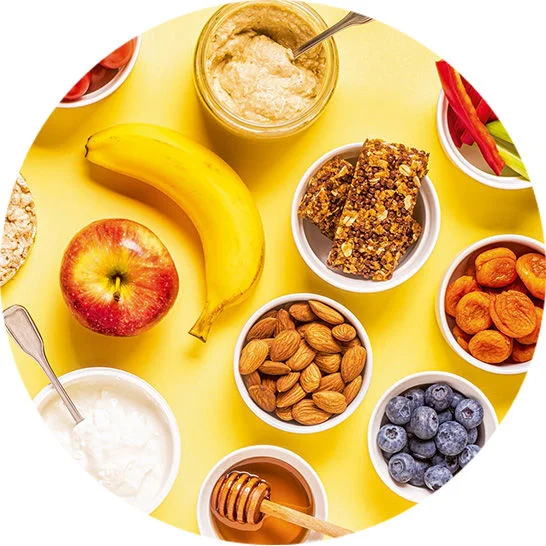
People used to think snacks were a must for keeping blood glucose steady for people with diabetes. Now we understand that not everyone needs a snack2. Thanks to tools like Libre systems, people living with diabetes have information they can use.
When you’re on the go, it’s tempting to grab whatever’s convenient. But to avoid high glucose levels, it’s important to be mindful of your carb intake—especially because processed snack foods often contain added sugar or carbohydrates3.
1. Choose a combination of protein, healthy fats, and fiber, with or without carbs4.
Choosing snacks with no or low carbohydrates can help you avoid raising your glucose levels3. Healthy snack choices contain protein5, fiber6, and healthy fats7, which work together to slow digestion and prevent glucose spikes8. High-fiber snacks have at least 5 g of fiber9 and high-protein snacks have over 10 g of protein10.
2. Avoid ultra-processed, high-sugar options3.
Many packaged snacks contain refined carbohydrates and added sugars. Watch for sugars in seemingly healthy snacks like granola bars, flavored yogurts, and trail mixes with sweetened dried fruit11. Note that “sugar-free” doesn’t necessarily mean low calorie or low carb12, and be aware that sugar alcohols like sorbitol and xylitol can raise glucose levels13.
Check ingredient lists to avoid the following11:
3. Keep portion sizes in check to prevent glucose spikes14.
It’s easy to overdo snacking throughout the day, leading you to eat more calories than you might realize15. Eating directly from the package can make it harder to estimate portions, so pre-portion snacks into individual servings16.
Nuts & seeds
A small handful
(1 oz)17

Hard cheese
A small matchbox14
(1 oz)18

Nut butter
A thumb-sized amount
(1 tbsp)17
There’s no one-size-fits-all answer. Some research suggests that eating smaller, more frequent meals may help stabilize glucose and reduce hunger for people with type 2 diabetes19.
On the other hand, time-restricted eating or intermittent fasting has also been linked to improved insulin sensitivity and weight management19,20.
The best approach, whether small, frequent snacks, or structured meals, may depend on your lifestyle, medication regimen, and personal preferences. You can use Libre systems to gain insight into what causes your glucose spikes.

When you’re on the go, easy access to healthy, tasty snacks can make all the difference. Here are some grab-and-go options to keep in your bag, car, or office:
Nuts and seeds22
A small handful of almonds, walnuts, pistachios, or pumpkin seeds provides protein, fiber, and heart-healthy fats23. Pre-portion into single-serving snack bags or reusable containers for easy access. Choose raw or dry-roasted options without added sugars or excess salt.
String cheese with whole-grain crackers24
Individually wrapped, low-fat string cheese makes a mess-free, protein-packed snack25. Pair with whole-grain or seed-based crackers for fiber and crunch. Look for crackers with fiber to help slow glucose absorption26.
Nut butter packets with celery21
Single-serve almond, peanut, or cashew butter packets are easy to stash in a bag. Pair with celery sticks for fiber27. Choose nut butters with no added sugars or oils and stick to 1–2 tbsp per serving17.
Hard-boiled eggs2
A protein powerhouse28 that’s naturally portable. Keep a couple in a small container. Sprinkle with everything bagel seasoning or sea salt for extra flavor. Store in a cooler bag with an ice pack if you’ll be out for several hours.
Tuna or salmon packets2
Single-serve pouches of tuna or salmon (without added oils or sauces) are rich in protein29,30 and omega-3s31. Eat straight from the packet or pair with whole-grain crackers or veggie sticks. Keep a plastic fork and napkin in your bag for easy snacking anywhere.
Roasted chickpeas21
An alternative to chips—look for pre-portioned snack packs. Choose flavored varieties without added sugar and be cautious as chickpeas are a bit higher in carbs. Chickpeas provide both protein and fiber32.
Low-sugar, high-fiber protein bars33
Sometimes, convenience is a must. Plan ahead and purchase diabetes-friendly protein bars that include protein and fiber, with as little sugar or sugar alcohols as possible34.
If your glucose falls below 70 mg/dL or below the level directed by your healthcare provider, you’ll need a quick source of fast-acting carbs to avoid hypoglycemia35. Foods with protein or fat, like chocolate, ice creams, or crackers, won’t raise your glucose quickly enough36. Please speak to your diabetes care provider if you often find yourself snacking to avoid hypoglycemia. Keep one or two of these snacks in your bag, car, or pocket in case of unexpected lows.
Glucose tablets or gel packs
These provide a precise dose of glucose (4 g per tablet) for rapid absorption.
Juice boxes
Juice delivers quick-digesting natural sugars37. Small, shelf-stable juice boxes (apple, orange, or grape) fit easily in a bag.
Honey or maple syrup packets
Individual honey or syrup packets38 are easy to carry.
Small candies39
Small, fast-dissolving candies provide a precise glucose boost—for instance, 15 Skittles equals 15 g of carbs36. They don’t melt or require refrigeration, making them ideal for pockets or purses.
Finding the right snack when you’re on the move doesn’t have to be a challenge. With a little planning and smart choices, you can avoid the temptation of less healthy options.
1. Plan ahead to have preportioned, grab-and-go options2.
2. Double-check nutrition labels40.
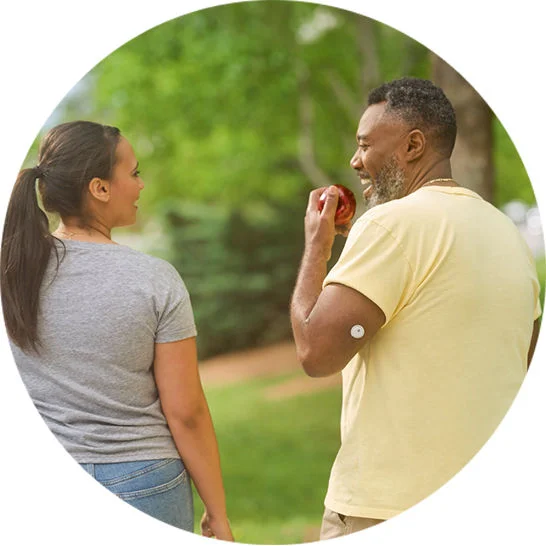



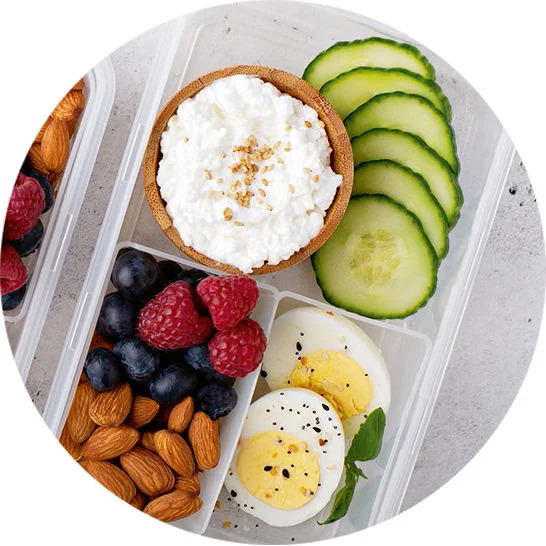
With Libre systems, you can see the impact of every bite of food. It features glucose trend arrows that can show you where you’re headed and what snacks make your glucose rise quickly—or more slowly.
You’ll be able to see reports about:
You can also add notes on your glucose graph to record specific snacks, which will give you an overall picture of your body’s response to snacking throughout the day.
Whether you’re rushing between meetings, running errands, or navigating a packed travel schedule, diabetes management doesn’t pause when life gets hectic.
By choosing protein, fiber, and healthy fats, and steering clear of high-sugar, processed snacks, you can stay fueled without the rollercoaster of glucose spikes43.
Each time you reach for a snack that supports your health, you’re making progress. It’s not about being perfect—it's about making small, consistent choices that add up over time.

Learn more about Libre systems today.
Meal order matters—start in a glucose-friendly way.
What you eat first and last can affect your glucose.

Build diabetes-friendly meals13 with a few steps.
Your guide to creating balanced meals—no complicated rules or counting.

Tips to help ease anxiety from diabetes stress.
Diabetes stress is real, but simple daily habits can help bring more calm.
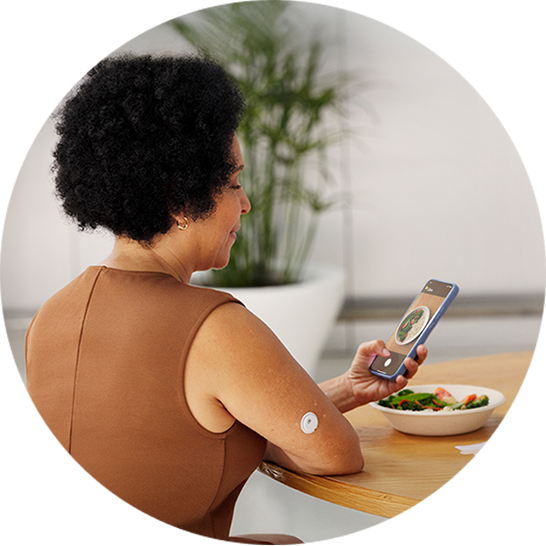
Make in-the-moment food choices.
The FreeStyle Libre 3 Plus sensor, along with Libre Assist‡, can help you predict the impact of food on your glucose§
Snap.
Take a photo of your meal.
Predict.
Libre Assist‡ predicts how your food can impact glucose§.
Know.
Get personalized food suggestions¶ to help lower glucose impact.
Want to try Libre systems and see how it works for yourself? Request a free♢ sensor now.
Share this article:


FreeStyle Libre 3 system is cleared to be used by children 4 years and older with Libre 3 sensor and 2 years and older with Libre 3 Plus sensor.
FreeStyle Libre 2 system is cleared to be used by children 4 years and older with Libre 2 sensor and 2 years and older with Libre 2 Plus sensor.
Medicare and other payor criteria may apply.
* Based on retail sales data for patients’ last-filled prescription, by manufacturer. ADC DME data based on internal reports, Dexcom DME data based on Dexcom earnings reports.
‡ Libre Assist is a feature within Libre app that uses generative artificial intelligence to provide information on how foods could impact your glucose levels. Generative artificial intelligence may not always be accurate, and it should not be used to make treatment decisions.
§ Predicted glucose impact is based on user-provided food data and may differ from actual impact, which depends on sensor readings and factors like activity, stress, medication, and alcohol. For personalized advice, consult your healthcare provider.
# The FreeStyle Libre systems apps are only compatible with certain mobile devices and operating systems. Please check the Support section of our website for more information about device compatibility before using the apps. Use of the FreeStyle Libre systems apps may require registration with LibreView.
¶ Personalized food suggestions are based on food preference information inputted by the user.
References: 1. American Diabetes Association. "Continuous Glucose Monitoring and Nutrition." Accessed September 9, 2026. https://professional.diabetes.org/sites/dpro/files/2024-03/CGMandNutrition.pdf. 2. ADA Nutrition & Wellness Team, “Snacking Success,” American Diabetes Association. Accessed September 9, 2026. https://diabetesfoodhub.org/blog/snacking-success. 3. American Diabetes Association. “Carb Counting and Diabetes.” Accessed September 9, 2026. https://diabetes.org/food-nutrition/understanding-carbs/carb-counting-and-diabetes. 4. American Diabetes Association. “Meal Planning.” Accessed September 9, 2026. https://diabetes.org/food-nutrition/meal-planning. 5. Yang, Junyoung, et al. “Changes in the Glucose and Insulin Responses According to High-Protein Snacks for Diabetic Patients.” Nutrition Research and Practice 15, no. 1 (2021): 54–65. https://doi.org/10.4162/nrp.2021.15.1.54. 6. Centers for Disease Control and Prevention. “Fiber: The Carb That Helps You Manage Diabetes.” Accessed September 9, 2026. https://www.cdc.gov/diabetes/healthy-eating/fiber-helps-diabetes.html. 7. Sivri, Dilek and Akdevelioğlu, Yasemin. “Effect of Fatty Acids on Glucose Metabolism and Type 2 Diabetes.” Nutrition Reviews, Volume 83, Issue 5, May 2025, Pages 897–907. Accessed October 2, 2026. https://academic.oup.com/nutritionreviews/article/83/5/897/7895736. 8. Papakonstantinou, Emilia, Christina Oikonomou, George Nychas, and George D. Dimitriadis. “Effects of Diet, Lifestyle, Chrononutrition, and Alternative Dietary Interventions on Postprandial Glycemia and Insulin Resistance.” Nutrients 14, no. 4 (2022): 823. https://doi.org/10.3390/nu14040823. 9. Whole Grains Council. “Fiber in Whole Grains.” Accessed Accessed September 9, 2026. https://wholegrainscouncil.org/whole-grains-101/identifying-whole-grain-products/fiber-whole-grains. 10. Toland, Angela. “Protein Claims for Food Labels: What You Need to Know.” Datacor. Accessed September 9, 2026. https://www.datacor.com/resources/nutrient-content-claims-for-protein-what-you-need-to-know. 11. Gager, Erin. “Finding the Hidden Sugar in the Foods You Eat.” Johns Hopkins Medicine. Accessed September 9, 2026. https://www.hopkinsmedicine.org/health/wellness-and-prevention/finding-the-hidden-sugar-in-the-foods-you-eat. 12. American Diabetes Association. “Reading Food Labels.” Accessed September 9, 2026. https://diabetes.org/food-nutrition/reading-food-labels/making-sense-food-labels. 13. American Diabetes Association. “What Are Sugar Alcohols?” Diabetes Food Hub. Accessed September 9, 2026. https://diabetesfoodhub.org/blog/what-are-sugar-alcohols. 14. Diabetes UK. “Portion Sizes and Diabetes.” Accessed September 9, 2026. https://www.diabetes.org.uk/living-with-diabetes/eating/portion-sizes. 15. Heitman, K., S. E. Thomas, O. Kelly, et al. “Snacks Contribute Considerably to Total Dietary Intakes among Adults Stratified by Glycemia in the United States.” PLOS Global Public Health 3, no. 10 (2023): e0000802. https://doi.org/10.1371/journal.pgph.0000802. 16. National Institute of Diabetes and Digestive and Kidney Diseases. “Food Portions: Choosing Just Enough for You.” National Institute of Diabetes and Digestive and Kidney Diseases. Accessed September 9, 2026. https://www.niddk.nih.gov/health-information/weight-management/just-enough-food-portions. 17. Gutwald, K. “Choosing the Best Nut Butter for Diabetes.” Type 2 Diabetes. Accessed September 19, 2026. https://type2diabetes.com/nutrition/nut-butter. 18. Diabetes Care Community. “Choose Your Cheese Wisely.” Diabetes Care Community. Accessed September 9, 2026. https://www.diabetescarecommunity.ca/diet-and-fitness-articles/diabetes-diet-articles/choose-your-cheese-wisely/. 19. Gómez-Ruiz, Roxana Paola, Abraham Isaí Cabello-Hernández, Francisco Javier Gómez-Pérez, and Miguel Ángel Gómez-Sámano. “Meal Frequency Strategies for the Management of Type 2 Diabetes Subjects: A Systematic Review.” PLOS ONE 19, no. 2 (2024): e0298531. https://doi.org/10.1371/journal.pone.0298531. 20. Harris, Carlee, and Krzysztof Czaja. “Can Circadian Eating Pattern Adjustments Reduce Risk or Prevent Development of T2D?” Nutrients 15, no. 7 (2023): 1762. https://doi.org/10.3390/nu15071762. 21. ADA Nutrition & Wellness Team. “24 Simple Snack Ideas.” American Diabetes Association. Accessed September 9, 2026. https://diabetesfoodhub.org/blog/24-simple-snack-ideas. 22. Nishi, Stephanie K., et al. “Nuts in the Prevention and Management of Type 2 Diabetes.” Nutrients 15, no. 4 (2023): 878. https://doi.org/10.3390/nu15040878. 23. Diabetes UK. “Healthy Food Swaps: Snacks.” Accessed September 9, 2026. https://www.diabetes.org.uk/living-with-diabetes/eating/healthy-swaps/healthy-swaps-snacks. 24. American Diabetes Association. "5 Ideas to Reduce Sugar in Your Diet." Accessed September 9, 2026. https://diabetes.org/health-wellness/weight-management/5-ideas-reduce-sugar-diet. 25. U.S. Department of Agriculture, Agricultural Research Service, Beltsville Human Nutrition Research Center. “Cheese, Mozzarella, Nonfat or Fat Free (FDC ID 2705725).” FoodData Central. Accessed September 9, 2026. https://fdc.nal.usda.gov/food-details/2705725/nutrients. 26. Diabetes UK. “Crackers.” Accessed September 9, 2026. https://www.diabetes.org.uk/guide-to-diabetes/enjoy-food/eating-with-diabetes/diabetes-food-myths/crackers. 27. University of Rochester Medical Center. “Nutrition Facts: Celery, Raw, 1 Stalk, Medium (7-1/2" - 8" Long).” University of Rochester Medical Center Encyclopedia. Accessed September 9, 2026. https://www.urmc.rochester.edu/encyclopedia/content?contenttypeid=76&contentid=11143-5. 28. Harvard Health Publishing. “Eggs, Protein, and Cholesterol: How to Make Eggs Part of a Heart-Healthy Diet.” Accessed September 9, 2026. https://www.health.harvard.edu/nutrition/eggs-protein-and-cholesterol-how-to-make-eggs-part-of-a-heart-healthy-diet. 29. U.S. Department of Agriculture, Agricultural Research Service, Beltsville Human Nutrition Research Center. “Fish, Salmon, Pink, Canned, Drained Solids (FDC ID 175175).” FoodData Central. Accessed September 9, 2026. https://fdc.nal.usda.gov/food-details/175175/nutrients. 30. U.S. Department of Agriculture, Agricultural Research Service, Beltsville Human Nutrition Research Center. “Fish, Tuna, White, Canned in Water, Drained Solids (FDC ID 175158).” FoodData Central. Accessed September 9, 2026. https://fdc.nal.usda.gov/food-details/175158/nutrients. 31. Cleveland Clinic. “Omega-3 Fatty Acids.” Accessed September 9, 2026. https://my.clevelandclinic.org/health/articles/17290-omega-3-fatty-acids. 32. U.S. Department of Agriculture. “Chickpeas (Garbanzo Beans, Bengal Gram), Canned, Sodium Added, Drained and Rinsed.” FoodData Central (FDC ID 2644288). Accessed September 9, 2026. https://fdc.nal.usda.gov/food-details/2644288/nutrients. 33. Dimopoulou, M., et al. “Postprandial Glucose Response in Type 2 Diabetes Mellitus Patients and Possible Antioxidant Properties of a Plant-Based Snack Bar.” Foods 13, no. 24 (2024): 4123. https://doi.org/10.3390/foods13244123. 34. Diabetes UK. “Cereal Bars.” Accessed September 9, 2026. https://www.diabetes.org.uk/guide-to-diabetes/enjoy-food/eating-with-diabetes/diabetes-food-myths/cereal-bars. 35. Centers for Disease Control and Prevention. "Treatment for Low Blood Sugar (Hypoglycemia)." Accessed September 9, 2026. https://www.cdc.gov/diabetes/treatment/treatment-low-blood-sugar-hypoglycemia.html. 36. UCSF Health. “Treating Low Blood Sugar.” Accessed September 9, 2026. https://www.ucsfhealth.org/education/treating-low-blood-sugar. 37. National Institute of Diabetes and Digestive and Kidney Diseases. “Low Blood Glucose (Hypoglycemia).” Accessed September 9, 2026. https://www.niddk.nih.gov/health-information/diabetes/overview/preventing-problems/low-blood-glucose-hypoglycemia. 38. Cleveland Clinic. "Hypoglycemia (Low Blood Sugar)." Accessed September 9, 2026. https://my.clevelandclinic.org/health/diseases/11647-hypoglycemia-low-blood-sugar. 39. American Diabetes Association. “Signs, Symptoms, and Treatment for Hypoglycemia (Low Blood Glucose).” Accessed September 9, 2026. https://diabetes.org/living-with-diabetes/hypoglycemia-low-blood-glucose/symptoms-treatment. 40. Johns Hopkins Diabetes Guide. “How to Read the New Food Label.” The Johns Hopkins Patient Guide to Diabetes, The Johns Hopkins University. Accessed September 9, 2026. https://hopkinsdiabetesinfo.org/how-to-read-the-new-food-label/. 41. American Diabetes Association. “Check Your Blood Glucose | Diabetes Testing & Monitoring.” Accessed September 9, 2026. https://diabetes.org/living-with-diabetes/treatment-care/checking-your-blood-sugar. 42. American Diabetes Association. “Good to Know: Continuous Glucose Monitoring and Nutrition.” Clinical Diabetes 42, no. 3 (2024): 463. https://doi.org/10.2337/cd24-pe03. 43. Centers for Disease Control and Prevention. “Diabetes Meal Planning.” Accessed September 9, 2026. https://www.cdc.gov/diabetes/healthy-eating/diabetes-meal-planning.html. 44. ADA Nutrition & Wellness Team. “What Is the Diabetes Plate?” Diabetes Food Hub. American Diabetes Association. Accessed September 9, 2026. https://diabetesfoodhub.org/blog/what-diabetes-plate.
The "Yes" link below will take you out of the Abbott Laboratories family of websites. Links which take you out of Abbott Laboratories worldwide web sites are not under the control of Abbott Laboratories, and Abbott Laboratories is not responsible for the contents of any such site or any further links from such site. Abbott Laboratories is providing these links to you only as a convenience, and the inclusion of any link does not imply endorsement of the linked site by Abbott Laboratories.
Do you wish to leave this site?