

A HbA1c or A1c test is used by doctors and healthcare professionals to measure your average blood sugar level over the last 2-3 months. The test result is used to diagnose, monitor, and manage treatment decisions for diabetes. HbA1c is measured as a percentage(%).
What is HbA1c and how is it used to measure diabetes?210

Why is HbA1c important?210
In general, a higher HbA1c indicates a higher risk of long-term diabetes complications. If you have either type 1 or type 2 diabetes, your doctor will check your HbA1c levels to decide on the best treatment plan for you, and help you set a target to lower your HbA1c.
What is considered a normal HbA1c range?211
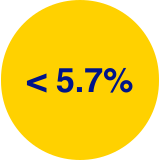
Non-diabetes
A healthy HbA1c is below 5.7%
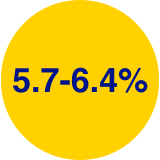
Prediabetes
HbA1c between 5.7-6.4% indicates prediabetes. This means you are at risk of developing diabetes
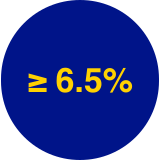
Diabetes
HbA1c of 6.5% or above indicates diabetes
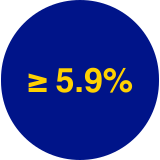
Gestational diabetes
If you do not have diabetes, HbA1c of 5.9% in the first 15 weeks of pregnancy may mean you are at higher risk for gestational diabetes.
HbA1c on its own does not tell the full story
HbA1c does not give a full picture of your blood sugar levels. It does not account for the ups and downs of your blood sugar within a day or show patterns in your blood sugar over time. HbA1c also can't tell you whether you experience hypoglycemia. Gaining insight into what's affecting your blood sugar can help customize a diabetes management plan suited to your individual needs and routine.
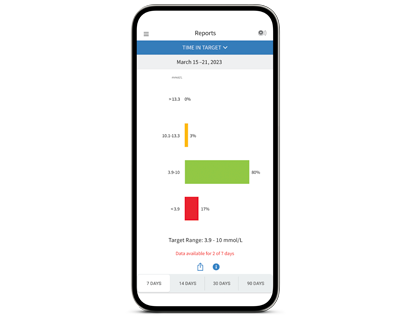
Time in Range (TlR) is increasingly being used to assess blood sugar in combination with HbA1c. TIR is a measurement of how much of the day your blood sugar spends within your target range.
It is measured as a percentage (%) 211. The higher the TIR, the better the glucose control.
People can have similar HbA1c but different TIR210
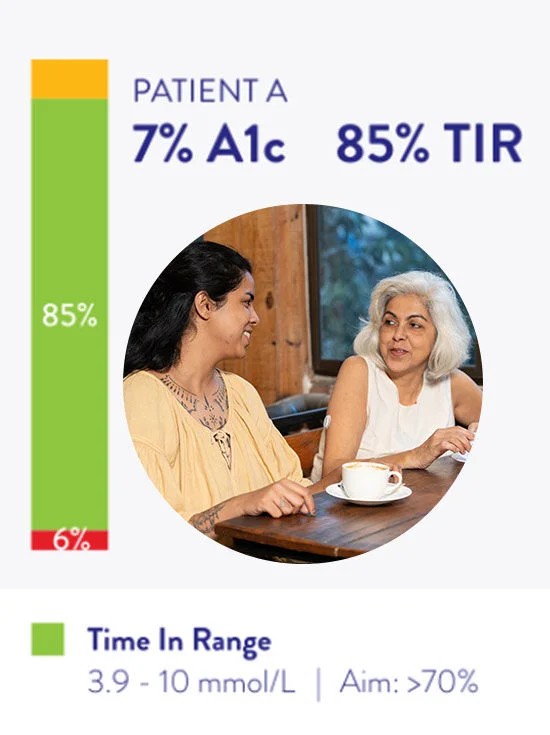
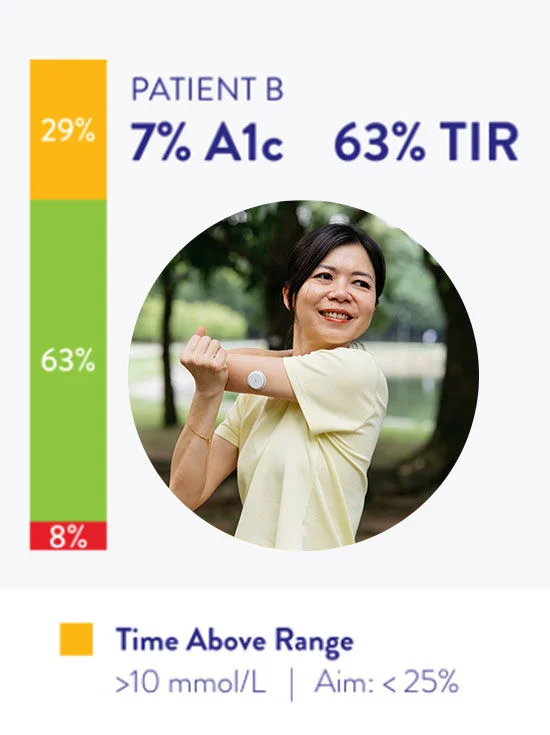
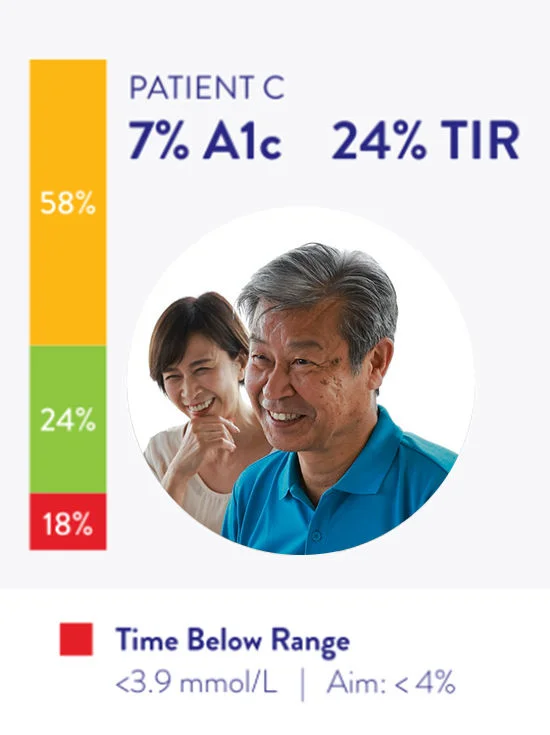
What is recommended Time In Range (TIR) if I have diabetes?210
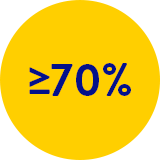
Type 1 & type 2
At least 70% of the day:
3.9 - 10 mmol/L
Older or high-risk type 1 & type 2
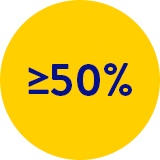
At least 50% of the day:
3.9 - 10 mmol/L
Type 1 during pregnancy
At least 70% of the day:
3.5 - 7.8 mmol/L

Join the 7 million people who use the Libre systems worldwide1.
Learn more about the Libre 2 Plus systems today.

Helping you progress is part of the program.
As a member of Libre Care, we will keep you informed about important information designed to enhance your Libre experience.

More articles you may like.

A closer look at hypoglycemia
Find out why keeping an eye on hypoglycemia is important, learn about common symptoms and risk factors, and get tips on how to avoid it.

How to talk to your child with diabetes?
Explaining diabetes to your child and following a specific meal plan can be challenging. Here’s what you can do.

What is the difference between type 1 and type 2 diabetes?
Understanding the differences between the types of diabetes helps you better comprehend what you or your loved ones are experiencing.
ADC-2689340 v1.0